If you’re a hardgainer aiming to bulk, whey protein is usually the best choice because it absorbs quickly, has a complete amino acid profile, and has a high leucine content that promotes muscle growth. Plant proteins can work if you combine different sources or fortify them with amino acids, but they often digest more slowly and may lack certain amino acids. Staying consistent with your protein intake is key; examine your options further to find what suits your goals best.
The Bottom Line
- Whey offers faster absorption, higher leucine content, and complete amino acid profiles, making it more effective for rapid muscle growth.
- Plant proteins are often incomplete but can be combined or fortified to match amino acid profiles needed for bulking.
- Hardgainers benefit from higher leucine intake; whey naturally provides this, while plant sources may require blending or supplementation.
- Plant-based proteins are suitable for those with lactose intolerance, vegan preferences, or environmental concerns, though digestion may be slower.
- Consistent, evenly spaced protein intake (20–30g per meal) is essential regardless of source for optimal muscle gains.
Which Protein Is Best for Hardgainers?

When it comes to choosing the best protein for hardgainers, whey protein is usually the top recommendation. It’s convenient, easy to mix, and supports lean mass growth. You’ll find plenty of flavor options, making it easier to stick to your routine. Whey protein is also quickly absorbed by the body, which makes it especially effective for post-workout recovery. Supplement timing matters too; most use whey post-workout for quick recovery. For those with digestive issues or dairy avoidance, plant-based proteins are a good alternative, especially if they’re easier on your stomach. Remember, the key isn’t just the protein choice but maintaining a calorie surplus and consistent intake. Choosing a high-quality protein source can make a significant difference in your bulking results. Incorporating a protein variety that suits your dietary needs and preferences can also enhance your overall progress. Whichever you choose, focus on regular use and proper timing to support your bulking goals.
Understanding Protein Quality and Amino Acid Profiles
Understanding protein quality and amino acid profiles is key to building muscle effectively.
Complete proteins, like whey, contain all nine essential amino acids in the right amounts, which supports muscle growth.
Leucine, an essential amino acid, triggers muscle synthesis.
Whey usually has more of it than plant-based proteins, making it a strong choice for hardgainers.
Additionally, the digestibility and absorption rate of whey are generally higher, leading to quicker muscle recovery and growth.
Since whey is a fast-digesting protein, it provides rapid amino acid delivery to the muscles, further enhancing its effectiveness for muscle building.
The amino acid profile of whey is particularly advantageous for stimulating muscle protein synthesis compared to many plant-based options.
Complete Proteins in Focus
Proteins are the building blocks of muscle, but not all proteins are equal. To support proper protein synthesis and maintain amino acid balance, you need complete proteins. These contain all nine essential amino acids in enough amounts for your body’s needs.
Whey is a prime example, with a high concentration of essential amino acids and a strong DIAAS score, making it a top-quality source.
Many plant proteins are incomplete, but blending sources like pea and rice can improve their amino acid profile. Soy protein isolate is another good option, often considered a true complete plant protein.
Choosing the right complete protein helps you build muscle effectively and efficiently.
Leucine Content Significance
Leucine plays a crucial role in muscle growth because it acts as the main trigger for muscle protein synthesis (MPS). Reaching leucine saturation is necessary to activate this process effectively.
A protein with high leucine content can better achieve this saturation, making it more efficient for bulking. Amino acid synergy also matters—combining different plant proteins or adding leucine guarantees you hit the right threshold.
While whey naturally offers higher leucine density, plant proteins can be just as effective when fortified or blended. For hardgainers, understanding this balance helps optimize muscle gains without unnecessary calorie overload.
Whey vs. Plant-Based Proteins: Pros and Cons
Both whey and plant-based proteins can help you build muscle, but they each have distinct advantages and drawbacks.
Whey offers a complete protein with high BCAA content, supports fast digestion, and has a creamy texture. However, it contains lactose, which can upset lactose-intolerant people, and isn’t vegan-friendly.
Plant-based options are lactose-free, lower allergen, and suitable for vegans. They often come with more flavor options and are packaged sustainably, which appeals to environmentally conscious users. Additionally, protein quality is an important factor to consider, especially for ectomorphs aiming to maximize muscle growth.
Some plant-based protein blends may require combining different sources to ensure a complete amino acid profile, which is essential for optimal muscle development.
How Protein Absorption and Leucine Content Affect Muscle Growth
How quickly your body absorbs protein plays a big role in muscle growth. Faster absorption means amino acids enter your bloodstream quickly, triggering muscle protein synthesis more effectively.
Whey is known for high amino acid bioavailability and rapid digestion, making it a strong option for muscle building.
In contrast, plant proteins often absorb more slowly and may have lower leucine content, which is vital for stimulating growth.
Leucine is a key protein synthesis trigger.
To maximize muscle growth, focus on protein sources with high bioavailability and leucine levels.
Combining different plant proteins or choosing processed options like soy can help improve absorption and anabolic potential.
Additionally, creatine supplementation has been shown to support muscle gains, especially in hardgainers, by increasing strength and allowing for more effective training.
Furthermore, considering protein digestion rates can help tailor your intake to optimize muscle synthesis timing.
Practical Tips for Incorporating Protein Into Your Bulking Diet
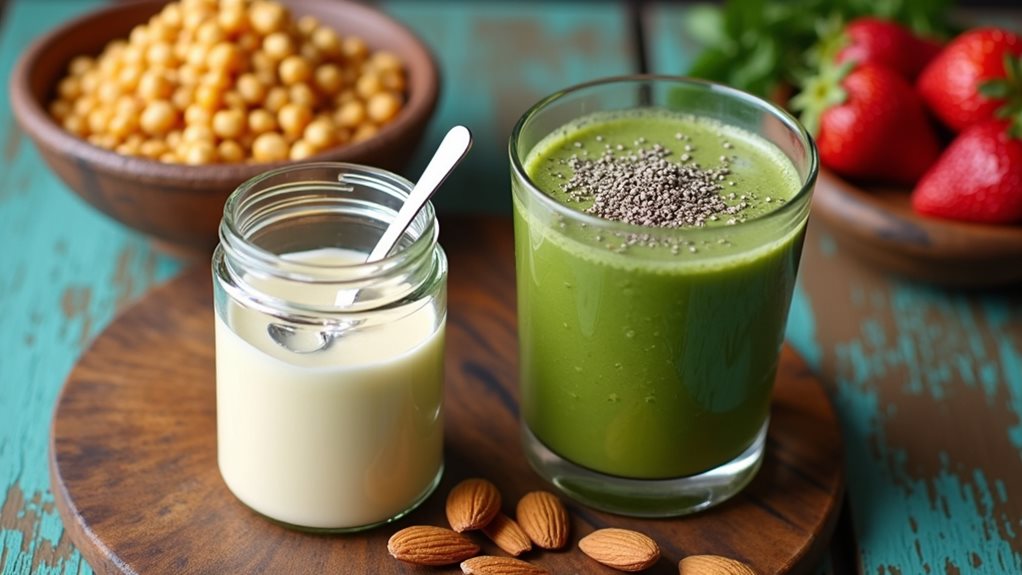
To effectively incorporate protein into your bulking diet, you need a clear plan for meal timing and distribution. Spread protein across 4–5 meals to make high intake easier.
Aim for 20–30 grams per meal, or 30–40 grams with plant proteins. Focus on including protein at breakfast, lunch, dinner, and snacks, sticking to a consistent schedule.
Use food pairing strategies like combining grains with legumes or pairing protein with carbs such as rice or bread. These methods help guarantee you’re meeting your daily goals while enjoying variety.
Proper meal timing and smart food pairing keep your progress steady and your diet sustainable.
Choosing the Right Protein Powder for Your Needs
When choosing a protein powder, consider how quickly your body absorbs it, as whey generally digests faster than plant-based options.
Look at whether the protein is complete, meaning it has all essential amino acids, or if you’ll need a blend to get the full range.
Also, think about your diet and tolerance—whey mightn’t suit everyone, especially if you’re lactose intolerant or vegan.
Protein Absorption Rates
Choosing the right protein powder depends a lot on how quickly your body absorbs the amino acids from it. Your protein digestion and absorption mechanisms determine how fast nutrients reach your muscles.
- Whey protein is fast-absorbing, with about 8–10 g per hour, making it ideal for quick recovery.
- Plant proteins generally absorb slower, often taking longer to deliver amino acids.
- Processing plant proteins, like soy isolate, can improve digestibility and absorption rates.
- The speed of absorption affects muscle protein synthesis timing but isn’t everything; total daily intake matters more for bulking.
Understanding these differences helps you pick the right protein for your goals.
Complete vs Incomplete Proteins
Not all protein powders are created equal, especially when it comes to supporting muscle growth. Complete proteins contain all nine essential amino acids needed for protein synthesis and muscle repair. Whey is a prime example, providing a perfect amino acid balance, making it straightforward for muscle building.
Most plant proteins are incomplete, missing one or more amino acids. However, some plant sources like soy or quinoa are complete. Combining different plant proteins can also fill these gaps over the day.
For bulking, choosing a complete protein powder simplifies your diet and guarantees you get the essential amino acids needed to maximize muscle growth and recovery.
Dietary Compatibility Considerations
Your dietary needs and preferences play a big role in choosing the right protein powder. Consider flavor options to enjoy your shakes and stick with your routine. Packaging sustainability matters if you want to reduce your environmental impact and support eco-friendly practices.
- Vegan-compatible or dairy-free options suit your dietary restrictions
- Sensitivity to dairy or allergens influences your choice
- Flavor variety helps keep your routine fresh and enjoyable
- Sustainable packaging aligns with your ethical values
Whether you prefer plant-based or whey, selecting a product that fits your diet, taste, and values assures you stay motivated. Your choice should feel right for your lifestyle and goals.
Overcoming Digestive Issues and Dietary Restrictions
Digestive issues and dietary restrictions can make finding the right protein source more challenging, but understanding your body’s needs helps you make smarter choices. If you experience bloating or discomfort, consider how protein fermentation affects your gut.
Incorporating digestive enzymes can help break down proteins more efficiently, reducing side effects. Plant-based proteins like pea, rice, and hemp are often gentler on sensitive stomachs and free from lactose, making them good options for dairy-free diets.
Starting with smaller servings and choosing lower-fat formulations can also improve tolerance. Careful ingredient screening and using enzyme blends may help you enjoy consistent protein intake without stomach distress, supporting your bulking goals.
Maximize Your Protein Intake for Better Muscle Gains
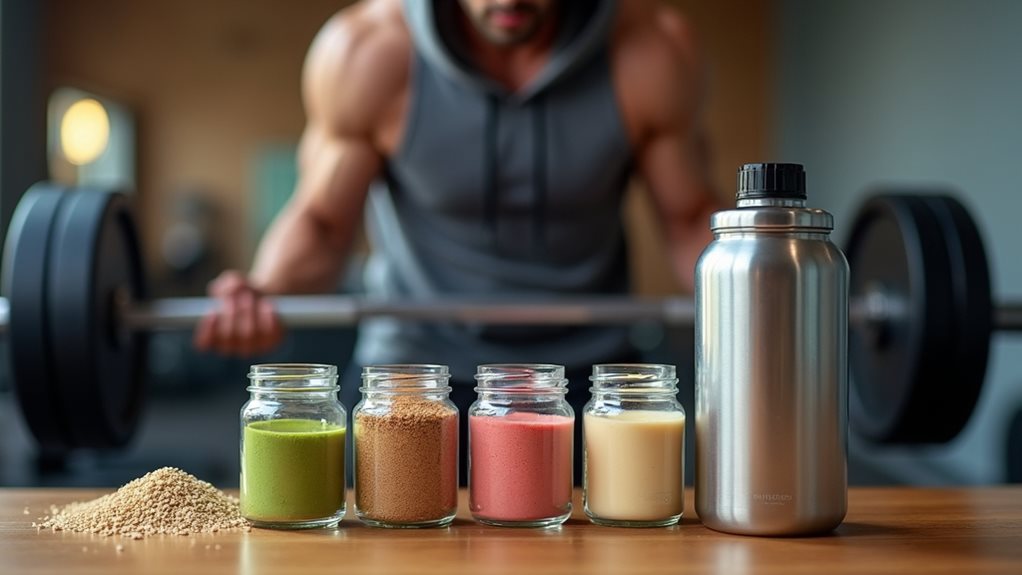
Maximizing your protein intake is key to gaining muscle, especially if you’re a hardgainer. To do this, focus on consistent intake, aiming for 1.6–2.2 g/kg/day.
Choose protein sources that fit your taste preferences and trust brands with a solid reputation. When shopping for powders, consider flavor options to stay motivated and guarantee you enjoy your supplements.
Remember, the source matters less than hitting your daily protein goal.
- Prioritize high-quality brands
- Select flavors you’ll enjoy
- Use protein powders to meet targets
- Focus on total daily intake for best results
Frequently Asked Questions
Can Plant-Based Proteins Support Muscle Growth as Effectively as Whey Long-Term?
Yes, plant-based proteins can support long-term muscle growth if you choose blends with complete amino acids, maintain high total intake, and enjoy flavor variety. Plus, they promote better digestive health, helping you stay consistent and connected to your goals.
How Do Different Plant Protein Blends Compare in Amino Acid Completeness?
You’ll find that diverse plant protein blends, with flavor variety and allergen considerations in mind, can be quite complete in amino acids, helping you build muscle while feeling included in plant-based communities. Just check their amino acid profiles!
Is There an Ideal Timing for Consuming Plant Protein Versus Whey?
You should consume whey immediately post-workout for quick absorption, embracing its lighter flavor profile, while plant protein is better suited for pre-workout or between meals, thanks to its slower digestion and richer, earthy flavor, supporting your bulking goals.
Do Plant Proteins Require Larger Servings to Match Whey’s Leucine Content?
Yes, plant proteins usually need larger servings to match whey’s leucine content, which can support better protein absorption and digestive health. By consuming more, you guarantee muscle growth and feel connected to a community prioritizing plant-based strength.
Are There Specific Plant Protein Sources Better for Hardgainers?
You’ll find soy benefits, like complete amino acids, making it great for hardgainers, but pea drawbacks include lower leucine content. Combining these sources can enhance your gains, helping you feel part of a strong, supportive fitness community.
Final Rep
Choosing the right protein depends on your needs and preferences. Whey offers fast absorption and high leucine content for muscle growth, making it a popular choice. Plant-based proteins can work well too, especially if you have dietary restrictions or digestive issues. Focus on consistent intake and proper nutrition. No matter what you pick, staying disciplined and integrating protein wisely into your diet will help you gain muscle effectively. Stick to your plan and be patient—results take time.
References
Sources
The information in this guide is based on the following sources:
- International Society of Sports Nutrition position stand: protein and exercise (2017)
- International Society of Sports Nutrition position stand: nutrient timing (2017)
- Examine.com: Whey protein supplement monograph
Disclaimer: The information on this page is for educational purposes only and is not medical advice. Supplements are not a substitute for professional medical care. Always consult a qualified healthcare professional before starting any supplement, particularly if you have a health condition, take medication, or are under 18. Read our full medical disclaimer.

The EctoBulk Research Team is the editorial unit behind EctoBulk’s mass gainer, whey protein and supplement guides for skinny guys, hardgainers and ectomorphs. Every article is researched, cross-checked and reviewed before publication, with an emphasis on honest evidence over hype