If you’re an ectomorph aiming to build muscle, creatine monohydrate is your best bet because it’s the most researched and proven safe supplement for long-term gains. Creatine nitrate can improve blood flow and offer short-term performance enhancements, but it’s more expensive and lacks long-term safety data. Both can work, but sticking to monohydrate offers proven results and reliability. Keep exploring to understand how proper use can maximize your progress.
The Bottom Line
- Creatine monohydrate is extensively researched, proven safe, and cost-effective for long-term muscle growth in ectomorphs.
- Creatine nitrate offers faster absorption and potential blood flow benefits but lacks long-term safety data.
- Monohydrate effectively maintains muscle creatine levels with a standard 3–5g daily dose; nitrate may require smaller doses.
- Monohydrate is more affordable and reliable, making it the preferred choice for consistent, sustained gains.
- Nitrate supplements may enhance workout “pump” and performance short-term but are less proven for long-term muscle development.
Why Creatine Is Important for Ectomorphs
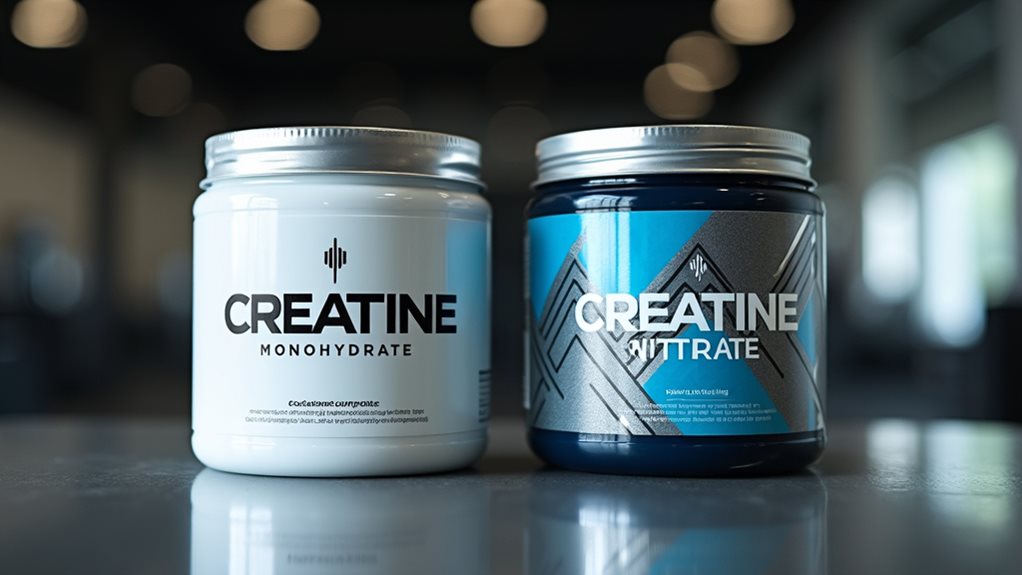
Creatine is especially important for ectomorphs because it helps improve your training performance and recovery. It enhances muscle endurance by increasing intramuscular phosphocreatine, which regenerates ATP during high-intensity efforts. This means you can push harder and last longer in your workouts. Additionally, taking creatine at optimal times can further amplify these benefits muscle growth potential. Creatine also supports hydration status by helping muscles retain water, making them look fuller and aiding recovery. Better recovery reduces fatigue and allows more consistent training. For ectomorphs, this improved performance and hydration can lead to better gains over time. Using creatine regularly can give you the extra edge needed to build muscle and reach your fitness goals, especially considering that creatine benefits are well-supported by scientific research.
Creatine Monohydrate vs. Nitrate: Which Is Better Supported by Science?
Science shows that creatine monohydrate has the strongest evidence supporting its use and safety. Creatine nitrate may absorb faster and show some performance benefits, but the research is limited compared to monohydrate. Extensive research involving thousands of participants over many years confirms the efficacy and safety of monohydrate, whereas studies on nitrate are still in preliminary stages. Additionally, the scientific consensus heavily favors monohydrate for long-term results and minimal side effects.
Scientific Evidence Comparison
While creatine monohydrate has been studied extensively over many years, creatine nitrate remains much less researched.
The scientific evidence strongly supports creatine monohydrate for increasing muscle creatine content and improving performance. Its long history of safety and effectiveness makes it a reliable choice.
Creatine metabolism studies show monohydrate consistently enhances energy production, regardless of supplement timing.
In contrast, research on creatine nitrate is limited. Some short-term studies indicate it can improve strength and body composition, but there’s no clear evidence it’s better supported by science.
For now, creatine monohydrate is the more proven option for consistent results.
Absorption and Efficacy
When comparing creatine monohydrate and nitrate, the focus often comes down to how well each form is absorbed by your body and how effectively they work.
Creatine nitrate is reported to have better short-term absorption, with about 38% higher uptake and nearly four times faster muscle bioavailability in small studies. It also increases creatine levels in blood and muscle more than monohydrate.
However, creatine monohydrate remains the gold standard backed by extensive research.
Despite some promising early results for nitrate, current evidence is limited. For reliable muscle bioavailability and proven efficacy, creatine monohydrate is still the best-supported choice.
Safety and Cost Factors
Choosing between creatine monohydrate and nitrate isn’t just about which works better; safety and cost are also key factors. Supplement safety is a major concern, and creatine monohydrate has the strongest safety record with decades of research. It’s well tolerated, with only mild side effects, and has proven kidney and liver safety.
Creatine nitrate shows promise in short-term studies but has limited long-term safety data.
Cost efficiency is another important factor. Monohydrate is much cheaper and offers the best value for your money, especially since it’s backed by extensive science.
For safety and savings, creatine monohydrate remains the clear choice.
Is Creatine Nitrate Safer or More Tolerable Long-Term?
Creatine monohydrate has a well-established safety record, especially for long-term use, while creatine nitrate’s safety data is limited mostly to short-term studies.
You can trust that monohydrate has been shown to support supplement absorption and muscle recovery without risking kidney health or causing long-term side effects. Its safety is backed by over 30 years of research and expert reviews.
In contrast, creatine nitrate’s long-term safety remains uncertain due to fewer studies. While it appears safe over a few weeks, there’s not enough evidence to confirm it’s safer or more tolerable over years. Safety profile is an important factor to consider when evaluating different forms of creatine.
For lasting safety, monohydrate remains the more reliable choice. Long-term safety is a critical consideration when choosing a supplement for ongoing use.
Cost and Practicality: Choosing the Best Creatine for Long-Term Use

Cost and practicality play a big role in deciding which creatine form will work best for long-term use. Creatine monohydrate is the most affordable option, costing less per serving and offering a proven track record backed by thousands of studies. It’s widely available in bulk, unflavored options, making it easy to adhere to consistently. Zinc and magnesium are also important for supporting muscle growth and recovery, which can enhance the effectiveness of your creatine supplementation. Brand reputation matters too—trustworthy brands guarantee quality and safety. While creatine nitrate may have better flavor options and faster absorption, it’s more expensive and less researched. For long-term use, sticking with monohydrate means reliable results, affordability, and simplicity—key factors for building a sustainable supplement routine.
How Dosing Affects Creatine Effectiveness for Ectomorphs
Your creatine results depend more on how consistently you take it than on taking large doses. A small, daily amount like 3–5 grams is enough to build and maintain muscle stores, especially with steady use. Loading phases can speed things up, but regular intake is key for steady progress over time. Additionally, sticking to the recommended dosage helps minimize potential side effects and ensures optimal absorption. Proper hydration and nutrient timing can also enhance creatine’s effectiveness for ectomorphs.
Importance of Consistent Intake
Have you ever wondered why taking creatine consistently matters so much, especially for ectomorphs? Your muscles need a steady supply to stay saturated with creatine, which builds strength and improves performance.
Irregular supplement timing, like skipping days, slows progress and reduces benefits. Even if you prefer natural alternatives, regular dosing remains essential.
Consistency keeps your muscle stores high, ensuring you see results over time. For ectomorphs, sticking to a daily routine of about 3–5 g helps maintain gains.
Being disciplined with your supplement intake isn’t just about convenience; it’s about making sure your efforts translate into real results.
Impact of Dose Size
The size of your creatine dose can have a big impact on how well it works, especially for ectomorphs who need to maximize every benefit. Larger doses like 3–5 g/day are common for maintenance, while higher doses help saturate muscles faster.
Creatine purity and dosing frequency matter too—higher purity forms may require smaller doses, and more frequent intake can improve saturation.
- Smaller doses like 1–3 g/day can be effective, especially with creatine nitrate
- Larger doses don’t always mean better results once muscles are saturated
- Faster blood absorption doesn’t guarantee better muscle gains
- Consistency and proper dosing are key for ideal effectiveness
When Should You Consider Trying Creatine Nitrate?
You should consider trying creatine nitrate when enhancing blood flow and achieving a better “pump” during workouts is a top priority. It offers alternative supplement combinations that focus on increasing vasodilation and nitric oxide production, which can improve your workout experience.
The psychological effects of feeling more energized and motivated can also be a plus. Creatine nitrate’s higher solubility and lower dosing make it a practical choice if you prefer to experiment before committing to larger doses.
Keep in mind, it’s ideal if you want a supplement that may support short-term performance and blood flow, especially when you’re seeking a different approach from traditional creatine options.
The Best Approach: Focus on Training, Nutrition, and Consistent Supplementation
Focusing on training, nutrition, and consistent supplementation is the best way to achieve muscle growth and strength. You should prioritize resistance training that challenges you, ensuring proper training quality.
Nutrition must support your goals with enough calories and protein to fuel gains.
Consistent supplement timing, such as taking creatine daily, enhances results.
Hydration strategies are essential—stay well-hydrated to optimize performance and recovery.
Remember, creatine monohydrate remains the best-supported choice, while alternative forms lack clear evidence of superiority.
Stay disciplined, keep effort high, and don’t rely solely on supplements—they’re only part of your overall plan.
Frequently Asked Questions
Can Creatine Nitrate Provide Faster Muscle Growth Than Monohydrate?
Creatine nitrate doesn’t provide faster muscle hypertrophy or growth speed than monohydrate. While it may improve absorption slightly, evidence shows monohydrate remains the most effective, affordable choice for ectomorphs aiming to stay ahead in muscle growth.
Are There Any Specific Health Conditions That Contraindicate Creatine Nitrate Use?
You should avoid creatine nitrate if you have kidney issues, low blood pressure, or bipolar disorder, as these conditions pose health risks and are contraindicated. Always consult your healthcare provider to guarantee safety for your specific health conditions.
How Long Does It Typically Take to See Results With Creatine Monohydrate?
You’ll see results with creatine monohydrate within 5–7 days, thanks to quick supplement absorption. Consistent dosage timing, like loading or daily maintenance, speeds up muscle saturation, helping you join others in faster strength gains and workout improvements.
Does Creatine Nitrate Improve Athletic Performance Beyond Strength Gains?
Creatine nitrate can support athletic performance beyond strength, increasing supplement absorption and offering cognitive benefits, especially in less-trained individuals. While it enhances high-intensity efficiency, evidence suggests it doesn’t outperform creatine monohydrate in overall strength and power gains.
Are There Differences in Taste or Mixability Between Creatine Monohydrate and Nitrate?
You’ll find creatine nitrate has a sharper, more acidic flavor and better powder solubility, making it easier to mix. Creatine monohydrate offers a milder taste but can be gritty if not fully dissolved.
Final Rep
Choosing between creatine monohydrate and nitrate depends on your goals and tolerance. Monohydrate is well-studied, effective, and affordable, making it a solid choice for most ectomorphs. Creatine nitrate might offer some benefits but isn’t proven to be considerably better and can be pricier. Focus on consistent training, good nutrition, and proper dosing. Supplements help, but your effort and habits make the biggest difference in your progress.
References
Sources
The information in this guide is based on the following sources:
-
https://pubmed.ncbi.nlm.nih.gov/36000773/
- International Society of Sports Nutrition position stand: safety and efficacy of creatine supplementation (2017)
- Kreider et al. (2017), PubMed record
- Examine.com: Creatine supplement monograph
https://pubmed.ncbi.nlm.nih.gov/31763026/
Disclaimer: The information on this page is for educational purposes only and is not medical advice. Supplements are not a substitute for professional medical care. Always consult a qualified healthcare professional before starting any supplement, particularly if you have a health condition, take medication, or are under 18. Read our full medical disclaimer.

The EctoBulk Research Team is the editorial unit behind EctoBulk’s mass gainer, whey protein and supplement guides for skinny guys, hardgainers and ectomorphs. Every article is researched, cross-checked and reviewed before publication, with an emphasis on honest evidence over hype