To enhance energy, focus on B vitamins that support energy production and blood flow. B1 (thiamine), B2 (riboflavin), and B3 (niacin) are key for converting carbs into fuel. B5, B6, and B7 help with fat and protein use, while B9 and B12 are essential for red blood cell creation, improving endurance. Choosing a high-quality B-complex supplement can help maximize these benefits. Keep exploring to learn how to optimize your intake for better results.
The Bottom Line
- B1 (Thiamine) enhances carbohydrate metabolism, providing quick energy for workouts and reducing fatigue.
- B2 (Riboflavin) supports oxygen utilization and energy production during physical activity.
- B3 (Niacin) aids in converting carbs, fats, and proteins into ATP for sustained energy.
- B6 (Pyridoxine) facilitates amino acid metabolism, promoting muscle repair and growth.
- B9 (Folate) and B12 (Cobalamin) boost red blood cell production, improving oxygen delivery and reducing fatigue.
Why Hardgainers Need B Vitamins for Energy and Growth

If you’re a hardgainer, you probably know that gaining muscle can be tough. That’s why B vitamins are essential for energy and growth. Since your body needs these nutrients for red blood cell formation, cell growth, and protein metabolism, inadequate intake can slow your progress. B vitamins are involved in various enzymatic reactions crucial for energy production, which means that without enough of these nutrients, your muscles may not recover or perform optimally. Ensuring sufficient B vitamin intake can also support overall metabolic efficiency, helping your body utilize nutrients more effectively. Adequate B vitamins can also assist in reducing muscle fatigue, allowing for more consistent training sessions. Supplement timing matters—taking B vitamins with meals can help your body absorb them better. Focus on dietary sources like lean meats, eggs, dairy, and leafy greens to support your needs. When training frequently and eating more, your B vitamin requirements rise. Ensuring you get enough helps prevent fatigue and enhances recovery, making your efforts more effective.
How B Vitamins Support Energy Production in Muscles
B vitamins are essential for turning food into energy your muscles can use during exercise. They help support processes like glycolysis and mitochondrial function, which are key to producing ATP, the energy your muscles need. Additionally, B vitamins aid in making red blood cells that carry oxygen to your muscles, helping you stay active longer and recover faster. Research shows that adequate B vitamin intake can prevent fatigue and enhance overall exercise performance. Ensuring sufficient B vitamin levels also supports metabolic efficiency, which is crucial for sustained energy during intense workouts. Proper B vitamin levels contribute to optimal energy metabolism, ensuring your body efficiently converts nutrients into usable energy.
B Vitamins and Glycolysis
B vitamins play an essential role in helping muscles turn food into energy through a process called glycolysis. They act as coenzymes that support enzymes in breaking down carbs into usable fuel.
To get the most benefit, focus on B vitamin absorption by taking them with meals or snacks. Timing matters—taking B vitamins before workouts can enhance energy availability when you need it most.
Since water-soluble B vitamins aren’t stored in large amounts, regular intake is necessary. Proper supplement timing and consistent use guarantee your muscles receive the support they need to efficiently convert glucose into ATP, the energy your body relies on during activity.
Mitochondrial Energy Conversion
Mitochondria are the powerhouses of your muscles, turning food into energy your body can use. To do this efficiently, mitochondrial signaling and B vitamin absorption are essential.
B vitamins like B1, B2, B3, and B5 act as coenzymes, helping enzymes in the TCA cycle and electron transport chain produce ATP, the energy your muscles need.
When B vitamin levels are adequate, mitochondrial function stays strong, supporting sustained energy. If B vitamin absorption drops, energy production slows, leading to fatigue.
Ensuring you get enough B vitamins helps maintain mitochondrial health and keeps your muscles fueled during workouts and recovery.
Red Blood Cell Support
Red blood cells play an essential role in transporting oxygen to your muscles, which is necessary for sustained energy and workout performance.
B vitamins like B12, folate, and B6 support red blood cell formation, helping your body deliver oxygen efficiently. Proper B vitamin absorption is key to maintaining this process, but too much B vitamin toxicity can be harmful.
Since water-soluble B vitamins aren’t stored well, regular intake is vital. Focus on a balanced diet to prevent deficiencies that cause fatigue and weakness.
Avoid mega-dosing beyond your needs, as excess B vitamins won’t enhance energy and can pose health risks.
How B1 (Thiamine) Enhances Carbohydrate Metabolism
Thiamine, or vitamin B1, is essential for turning the carbohydrates you eat into usable energy. It helps enzymes that process glucose work efficiently, so your body can produce the ATP it needs for activity. A proper EAA timing can further support your recovery and muscle growth. Without enough thiamine, your carbohydrate metabolism slows down, making it harder to fuel your workouts and recover properly. Ensuring adequate intake of B vitamins, especially in affordable mass gainers, can support overall energy levels and athletic performance.
Energy Conversion Process
Understanding how B1, or thiamine, helps your body turn carbohydrates into energy is key for anyone trying to improve their performance. Proper vitamin absorption is essential, so focus on taking thiamine with meals or when you eat carbs.
Supplement timing matters—taking B1 before or during high-carb meals can support energy production when you need it most. Thiamine works by helping enzymes transfer the energy from carbs into usable fuel.
Without enough B1, your body struggles to process glucose efficiently. Staying consistent with your supplement routine and ensuring you get enough vitamin B1 will help maximize your carbohydrate metabolism and enhance your energy levels naturally.
Glucose Utilization Efficiency
When your body processes carbohydrates, certain enzymes need cofactors like thiamine to work properly. Thiamine enhances glucose utilization by supporting enzymes that convert carbs into energy, especially pyruvate dehydrogenase.
This process influences electrolyte balance and hormonal regulation, both essential for energy production. Without enough thiamine, glucose metabolism slows, leading to less efficient energy and potential metabolic bottlenecks.
Proper thiamine levels help keep your cells functioning smoothly, ensuring carbs are turned into usable fuel. For hardgainers, maintaining adequate thiamine supports better carbohydrate use, increasing energy and strength without risking metabolic disruptions.
How B2 (Riboflavin) and B3 (Niacin) Keep Your Energy Up During Workouts
During your workouts, B2 (Riboflavin) and B3 (Niacin) keep your energy levels steady. Riboflavin helps convert food into energy and supports oxygen use, which is crucial during intense exercise. A simple whey protein shake can also support your nutritional needs during bulking. Niacin assists in turning carbs, fats, and proteins into ATP, the body’s main fuel. To maximize their benefits, pay attention to supplement timing—taking them around workouts can improve absorption. Absorption factors like food intake and overall diet also matter; taking these vitamins with meals enhances their effectiveness. Consistent intake guarantees your body stays fueled, helping you push through workouts without fatigue.
The Role of B5, B6, and B7 in Fat and Protein Utilization
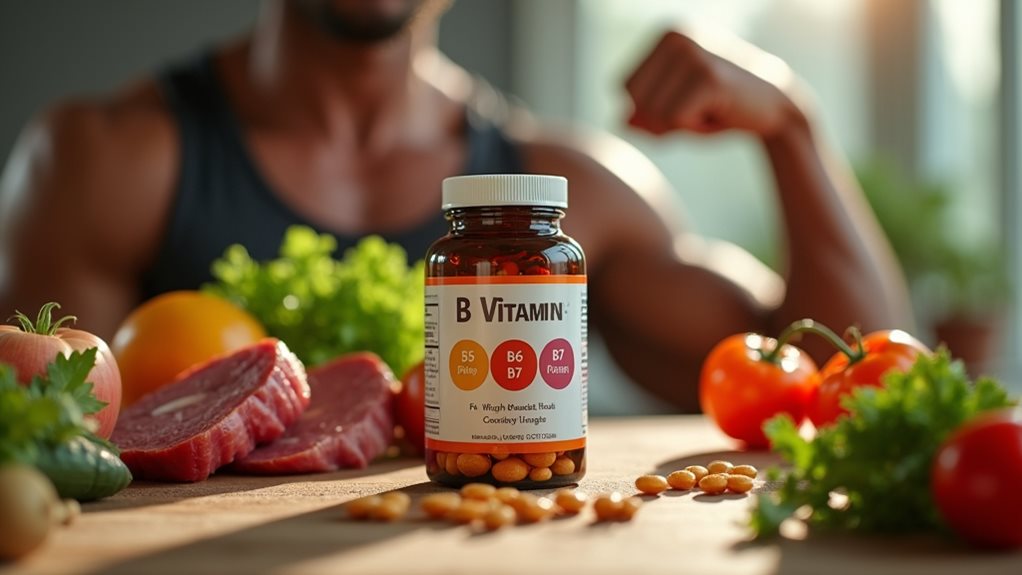
B5, B6, and B7 play essential roles in helping your body make the most of fats and proteins. B5 is key for B5 metabolism, supporting fat-to-energy conversion and stored fat use through acetyl-CoA. B7 helps with fat synthesis, regulating how your body creates and uses fats. B6 is crucial for protein metabolism, assisting in amino acid handling and energy from dietary proteins. Here’s what they do: – Support fat breakdown during B5 metabolism – Aid fat synthesis with B7 – Enhance amino acid conversion with B6 – Improve energy use from fats and proteins – Help your body efficiently fuel workouts and recovery. Understanding nutrient timing can further optimize how these vitamins support your bulking efforts.
Why B9 and B12 Are Essential for Red Blood Cell Production and Endurance
B9 (folate) and B12 are essential nutrients because they play a direct role in producing the red blood cells that carry oxygen throughout your body. Without enough of these vitamins, your body struggles to make healthy red blood cells, which are needed for efficient oxygen transport.
When red blood cell production drops, you may feel tired, weak, and lack endurance. Both vitamins are vital for DNA synthesis, helping your body create properly functioning red blood cells.
Ensuring sufficient B9 and B12 intake supports better oxygen delivery, enhancing your energy and endurance. Maintaining these nutrients helps you stay active and perform at your best.
How to Choose the Best B-Complex Supplements for Hardgainers
Choosing the right B-complex supplement can make a big difference for hardgainers who need reliable energy support. Focus on supplement timing and dosage guidelines to get the most benefit.
Look for a formula that includes all eight B vitamins, with clear amounts listed. Avoid products with excessive doses—more than 500% of daily value can cause harm.
Prioritize bioavailability, like activated forms of B vitamins, for better absorption. If your diet is limited or you suspect deficiencies, a balanced supplement helps fill gaps.
Always check for third-party testing to ensure quality. A well-chosen B-complex supports energy, nerve health, and overall performance.
Practical Tips to Incorporate B Vitamins Into Your Bulking Routine

Incorporating B vitamins into your bulking routine doesn’t have to rely solely on supplements. Use smart cooking techniques like steaming, baking, or sautéing to preserve B-vitamin content in foods like eggs, leafy greens, and fish.
Timing is key—take B-complex supplements with meals, especially in the morning, to support energy metabolism and training.
Spread B-rich foods across your day, including bananas, chickpeas, and fortified cereals, to make intake easier.
Focus on nutrient-dense meals that combine protein and B vitamins naturally.
Adjust your approach based on your diet and needs, and consider bloodwork if you suspect deficiencies.
Frequently Asked Questions
Can B Vitamins Improve Muscle Recovery After Intense Training?
B vitamins support energy metabolism and B vitamin absorption, which indirectly aids muscle repair processes. However, they don’t directly improve recovery after intense training, so focus on a balanced diet, hydration, and rest for ideal muscle repair.
Are B Vitamin Deficiencies Common in Hardgainers Without Supplementation?
You likely won’t experience B vitamin deficiencies without supplementation if you have good nutrient absorption and a varied diet. Watch for deficiency symptoms like fatigue or muscle weakness, especially if your diet lacks variety or quality.
How Do B Vitamins Interact With Other Supplements for Energy?
B vitamins work synergistically with other supplements, enhancing metabolism when taken together at ideal supplement timing. You’ll feel more energized by aligning B vitamin intake with your workout or daily routine, supporting your shared goal of peak performance.
Is It Better to Take B Vitamins Before or After Workouts?
Timing considerations show B vitamins are more about consistent intake than pre- or post-workout use. Absorption factors matter—taking them with food improves tolerance and guarantees steady support for energy metabolism and recovery, fitting your daily routine seamlessly.
Can Excess B Vitamins Cause Adverse Effects in Hardgainers?
Excess B vitamins can cause adverse effects like nutrient imbalance, nerve damage, and gastrointestinal issues. As someone dedicated to your health, avoid B vitamin overdose by sticking to recommended doses, preventing harmful side effects and supporting your fitness expedition.
Final Rep
Adding the right B vitamins can enhance your energy and support muscle growth. Focus on balanced B-complex supplements and include foods rich in these nutrients. Consistency is key, so make B vitamins part of your daily routine. They help your body turn food into fuel, improve endurance, and aid recovery. Stay disciplined, and you’ll notice better energy levels and progress over time. Proper nutrition is essential—don’t overlook the power of B vitamins for your hardgainer expedition.
References
Sources
The information in this guide is based on the following sources:
-
https://pubmed.ncbi.nlm.nih.gov/17240780/
- International Society of Sports Nutrition position stand: diets and body composition (2017)
- International Society of Sports Nutrition position stand: protein and exercise (2017)
- World Health Organization: Healthy diet
Sources
The information in this guide is based on the following sources:
- NIH Office of Dietary Supplements: Vitamin B12 fact sheet
- International Society of Sports Nutrition position stand: protein and exercise (2017)
- International Society of Sports Nutrition position stand: diets and body composition (2017)
Disclaimer: The information on this page is for educational purposes only and is not medical advice. Supplements are not a substitute for professional medical care. Always consult a qualified healthcare professional before starting any supplement, particularly if you have a health condition, take medication, or are under 18. Read our full medical disclaimer.

The EctoBulk Research Team is the editorial unit behind EctoBulk’s mass gainer, whey protein and supplement guides for skinny guys, hardgainers and ectomorphs. Every article is researched, cross-checked and reviewed before publication, with an emphasis on honest evidence over hype