For skinny teenage bodybuilders, a safe stack includes a quality multivitamin, vitamin D, and iron if needed, supported by a balanced diet. Focus on getting enough protein from food like lean meats, beans, and dairy. Consider adding creatine in small doses if approved by a healthcare professional, as it can enhance strength safely. Avoid risky products and always consult a doctor before starting any new supplement routine. Keep learning to build a safe, effective plan that works for you.
The Bottom Line
- Prioritize whole foods first; supplements should only fill nutritional gaps, especially with deficiencies in iron, calcium, or vitamin D.
- Focus on safe, evidence-based supplements like creatine and multivitamins, avoiding performance-enhancing or proprietary blends.
- Incorporate protein-rich foods and consider protein powders if dietary intake is insufficient for muscle growth.
- Ensure adequate sleep, post-workout nutrition, and micronutrient intake (zinc, magnesium) to support recovery and muscle development.
- Consult healthcare professionals regularly to tailor safe supplement routines aligned with growth and health needs.
Why Are Supplements Important for Teen Bodybuilders?
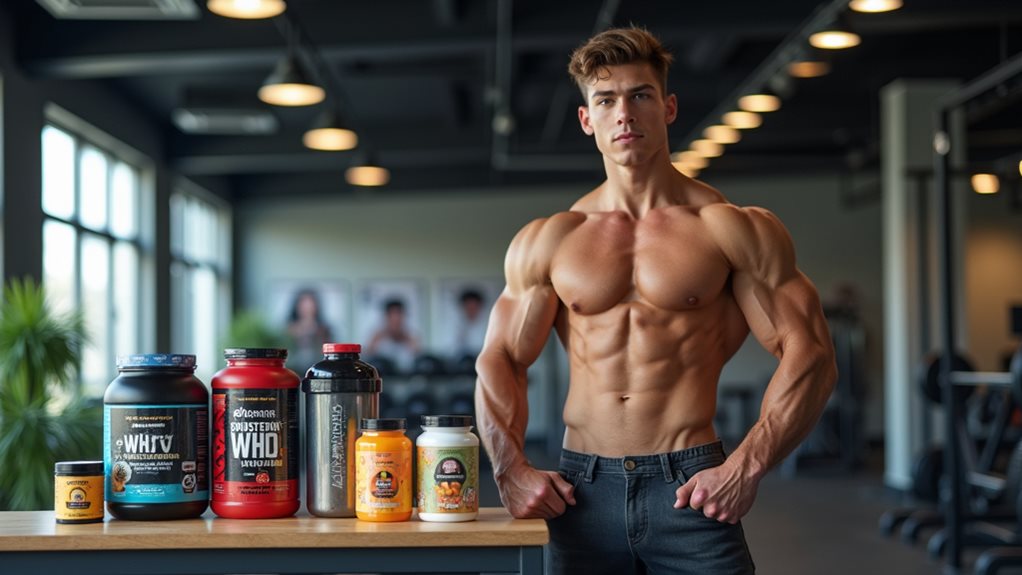
Supplements are important for teen bodybuilders because your body is growing quickly, and it can be hard to get all the nutrients you need from food alone. During adolescence, nutrient deficiencies like low iron, calcium, and vitamin D can impact your performance and long-term health. Most individuals can meet their nutritional needs through food alone; supplements are recommended only if deficiencies are identified (e.g., vitamin D, B12). Supplements are a helpful backup tool to fill those gaps, especially if your diet isn’t always balanced. However, supplement safety is key—never take anything without knowing it’s safe for teens. Consulting with healthcare providers before starting any supplement is essential to ensure safety and appropriateness. These products aren’t a shortcut but a way to support your body’s needs during this critical growth stage. Proper use helps you stay healthy and perform your best. Additionally, understanding the nutritional needs of teens can help you make better choices about supplementation. Being aware of recommended dietary allowances can also guide you in selecting appropriate supplements and prevent overuse.
What Are the Best Safe Supplements for Teens?
Most teens don’t need to take supplements regularly, especially if they eat a balanced teen diet. If you focus on proper meals—fruits, vegetables, whole grains, and lean proteins—you usually get all the nutrients you need. Nearly 12% of children in the U.S. use complementary health approaches, which highlights the importance of prioritizing healthy eating habits over supplements. Supplement safety is key. For example, vitamin D is often recommended if you’re low, but avoid high doses without guidance. Iron and zinc can support growth, but only if you’re deficient. Standard multivitamins are generally safe if you check labels and avoid performance or bodybuilding products. Remember, supplements should fill nutrient gaps, not replace healthy eating. Understanding safe supplement use is especially important for teens, as their bodies are still developing. It’s also important to be aware of potential adverse effects from improper supplement use, which can vary based on individual health conditions. Always talk to a healthcare professional before starting any new supplement.
How Can Teens Support Recovery and Performance?
Getting enough sleep is the most important way for teen athletes to recover and perform their best. Good sleep hygiene helps improve sleep quality and supports recovery. To do this, you should:
- Keep consistent bed and wake times, including weekends, within about an hour.
- Turn off phones and keep screens out of the bedroom.
- Sleep in a cool, dark room for better rest.
- Focus on meal timing by eating a healthy meal within 60 minutes after training to enhance recovery.
Avoid caffeine after noon. Proper sleep and meal timing are key to supporting your performance and overall health. Additionally, choosing the right supplements, such as whey protein, can help hardgainers build muscle faster without excess bloat. Ensuring your body receives essential micronutrients, like zinc and magnesium, is also crucial for optimal recovery and muscle growth, especially for hardgainers.
How Do I Build a Safe, Sustainable Supplement Routine?
Building a safe and sustainable supplement routine starts with understanding that supplements are just that—additions to a solid diet, not replacements for it. Focus on dosage guidelines and supplement safety first. Start with food, making certain you meet your protein and calorie needs before adding anything else. If needed, use low-risk, evidence-based supplements like creatine or vitamin D, following recommended doses. Always choose third-party tested products to guarantee quality. Avoid risky options like pre-workouts or proprietary blends. Monitor how your body responds and adjust gradually. This approach helps you build muscle safely and sustainably while staying healthy and connected to your training goals. Additionally, understanding the importance of proper nutrient intake can optimize your efforts and prevent deficiencies that might hinder your progress. Being aware of potential pre-workout side effects can help you make informed choices and avoid adverse reactions, especially for ectomorphs.
Frequently Asked Questions
Are Pre-Workout Supplements Safe for Teenagers?
Teenage supplement safety is a concern, so pre workout risks outweigh benefits for teens. You should avoid supplements with stimulants or unregulated ingredients, prioritize proper training, nutrition, and consult healthcare professionals for safe, effective progress.
How Much Protein Do Teens Need Daily for Muscle Growth?
Your protein intake for muscle development should be around 1.2–1.6 g/kg daily, roughly 70–120 grams, depending on your weight and activity level. Consuming protein regularly helps you build muscle and stay strong with your fitness progression.
Can Creatine Cause Long-Term Health Issues in Teens?
Creatine safety in teens remains uncertain long-term, but current research shows no proven health issues. While teen health implications are still being studied, supervised use may be safe, but you should always consult with a healthcare professional first.
Is It Necessary to Take Multivitamins if Eating a Balanced Diet?
If you’re eating a balanced diet, multivitamins aren’t necessary because good dietary balance supports proper vitamin absorption. Focus on variety to strengthen your health, and you’ll naturally get the nutrients your body needs without supplements.
When Should Teens Consider Adding BCAAS or Amino Acids?
You should consider amino acid timing if your diet’s lacking protein or during fasted or long training sessions, but prioritize whole foods for safety. Teens benefit most from focusing on basics like diet, not supplements.
Final Rep
Building a safe supplement routine is key to your progress. Focus on proven, age-appropriate options like protein and creatine, and always prioritize a balanced diet and proper training. Never rely solely on supplements; they support your efforts, not replace hard work. Stay informed, follow expert advice, and listen to your body. With consistency and good choices, you can grow stronger safely and sustainably. Keep your goals realistic and stay committed to safe practices.
Sources
The information in this guide is based on the following sources:
- International Society of Sports Nutrition position stand: diets and body composition (2017)
- International Society of Sports Nutrition position stand: protein and exercise (2017)
- International Society of Sports Nutrition position stand: nutrient timing (2017)
- NIH National Center for Complementary and Integrative Health: Bodybuilding and performance enhancement supplements
Disclaimer: The information on this page is for educational purposes only and is not medical advice. Supplements are not a substitute for professional medical care. Always consult a qualified healthcare professional before starting any supplement, particularly if you have a health condition, take medication, or are under 18. Read our full medical disclaimer.

The EctoBulk Research Team is the editorial unit behind EctoBulk’s mass gainer, whey protein and supplement guides for skinny guys, hardgainers and ectomorphs. Every article is researched, cross-checked and reviewed before publication, with an emphasis on honest evidence over hype