For skinny guys aiming to build lean muscle, a mass gainer should typically have between 650 and 1,200 calories per serving. This range helps create enough of a calorie surplus to promote growth without causing excessive fat gain. Your ideal amount depends on your activity level and current metabolism. It’s important to focus on quality ingredients, especially protein and complex carbs. By controlling intake and nutrition timing, you can optimize gains—continue to investigate for more detailed guidance.
The Bottom Line
- Skinny guys should aim for mass gainers with 650–1,200 calories per serving to support healthy muscle growth.
- Adjust calorie intake based on individual needs, typically increasing daily calories by 300-500 for lean gains.
- Use 1–2 scoops per serving, timing intake around workouts and meals for optimal absorption.
- Limit surplus to 200–350 extra calories daily to prevent excess fat gain.
- Choose high-quality formulas with balanced macros and low sugar to maximize muscle development.
How Many Calories Do Skinny Guys Need to Build Muscle?
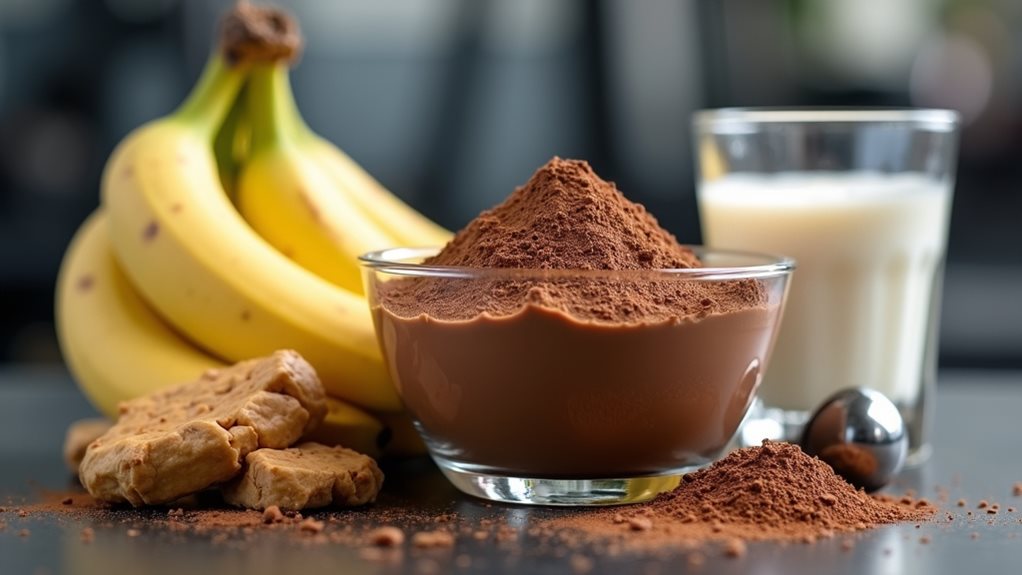
If you’re a skinny guy trying to build muscle, you need to eat more calories than you burn. A modest increase of 5% to 10% in daily calories helps support lean muscle growth. Usually, you’ll need an extra 300 to 500 calories daily, depending on your body and activity level. Using online calculators can help you accurately determine your daily calorie needs. Focus on high-protein foods and consider supplement timing to maximize gains. When choosing foods, think about flavor combinations that make eating enjoyable. Consistency is key—stick to your calorie goals for several weeks. Proper planning guarantees you gain weight steadily without excess fat, making your path toward muscle easier and more effective. Additionally, selecting effective mass gainer options can help you reach your calorie targets more easily, especially if you have a fast metabolism that burns calories quickly. Incorporating calorie-dense foods into your diet can further support your bulking efforts.
What Are Mass Gainers, and How Do They Help You Grow?
Mass gainers are supplements designed to help you put on weight by providing a concentrated mix of calories, protein, carbs, and fats. They’re especially useful if you find it hard to eat enough food to meet your muscle-building goals. Incorporating the right pre-workout dosage can also enhance your energy levels and workout performance, further supporting your muscle growth efforts. When choosing a mass gainer, it’s important to consider whether it contains ingredients tailored for hardgainers, who typically require different nutritional strategies to achieve optimal results.
Composition and Nutrients
Mass gainers are specialized supplements designed to help you increase your weight and build muscle. They contain a mix of carbohydrates, protein, and fats that work together to support your growth goals.
The nutrient composition varies, with typical carbohydrate-to-protein ratios from 3:1 to 2:1, providing sustained energy and muscle recovery.
Flavor combinations make them easier to enjoy, and knowing when to take them—like with supplement timing—maximizes their effectiveness.
These nutrients fuel your workouts, replenish glycogen, and promote muscle growth.
Role in Muscle Gain
Wondering how mass gainers actually help you build muscle? They create the necessary caloric surplus to activate muscle growth.
By increasing your daily calories and protein, they support muscle repair and hypertrophy. Mass gainers provide easily digestible carbs and high protein content, which fuels intense training sessions.
When choosing a brand, consider flavor preferences and compare options to find one you’ll stick with. They help you gain weight steadily, often 0.5–1 pound weekly, especially when paired with resistance training.
How to Choose the Right Calorie Content in Mass Gainers for Lean Muscle
Choosing the right calorie content in mass gainers is essential for building lean muscle without gaining excess fat. To do this, consider your specific goals and daily calorie needs. Look for options with flavor variety so you won’t get bored and stay motivated. Trust brands with a good reputation for quality and transparency. If you need more calories, premium formulas with up to 1,280 calories per serving can help. For moderate gains, choose mass gainers with 650–1,200 calories. Adjust serving sizes as needed, and pick a product that fits your taste preferences and credibility. Paying attention to macro balance can further optimize your muscle-building results. Understanding the differences between budget vs premium mass gainers can help you make an informed decision about value and quality. This approach guarantees steady progress and supports your lean muscle goals.
How Can You Adjust Your Mass Gainer Intake to Avoid Gaining Excess Fat?
To avoid gaining excess fat while using a mass gainer, it’s important to adjust your intake based on your body’s needs. Start by carefully calculating your caloric surplus—aim for only 200–350 extra calories daily. Consider the flavor combinations and packaging options to make your supplements enjoyable and convenient. Incorporate pre-workout tips for skinny guys with anxiety to optimize your energy levels and reduce the likelihood of overeating. You should also:
- Split servings into smaller portions, like half in the morning and half post-workout.
- Limit intake to 1–2 scoops daily.
- Consume your gainer at ideal times, such as after workouts or between meals.
- Choose formulas with complex carbs and minimal sugar to prevent unnecessary fat gain. Understanding caloric surplus management can further help you fine-tune your intake and avoid excess fat accumulation.
Adjusting these factors helps you build muscle without unnecessary fat.
Why Protein and Carbohydrates Are Key in Your Mass Gainer Strategy

Protein and carbohydrates are essential because they work together to build muscle and support recovery.
Protein provides the building blocks for muscle growth, while carbs give you the energy to perform and heal.
Combining the two in your mass gainer helps you gain lean muscle without unnecessary fat.
Building Muscle With Macros
Building muscle effectively depends largely on your macros, especially protein and carbohydrates. To support your gains, focus on these key points:
- Aim for a carb-to-protein ratio of 3:1 to keep energy steady and aid recovery.
- Choose high-quality protein sources like whey and casein for complete muscle growth.
- Pick complex carbs over added sugars for clean energy.
- Consider flavor preferences and packaging options that make your mass gainer enjoyable and easy to prepare, encouraging consistency.
Sticking to these principles helps you build muscle efficiently while enjoying the process. Stay disciplined and choose wisely to see real results.
Fueling Recovery and Growth
After focusing on how macros support muscle building, it’s important to understand how they work together during recovery and growth. Protein and carbohydrates are key because they help rebuild muscles and restore energy.
The right flavor combinations and ingredient sourcing make your mass gainer more enjoyable and healthy.
Post-workout, pairing carbs and protein enhances glycogen recovery and muscle repair. High-quality ingredients like grass-fed whey and clean carbs guarantee you’re fueling your body properly.
Consuming these nutrients soon after exercise maximizes growth.
Your mass gainer should support your goals with balanced macros, making recovery effective and growth steady.
Common Mistakes to Avoid When Using Mass Gainers for Lean Gains

Using mass gainer supplements without understanding how much you really need can lead to problems. Many skinnier guys overconsume calories, risking fat gain instead of lean muscle.
Here are key mistakes to avoid:
- Ignoring your personal calorie surplus needs; a 1,200-calorie shake often exceeds the ideal 250–500 surplus.
- Relying on poor-quality ingredients with fillers and added sugars that hinder progress.
- Over-dependence on supplements, ignoring whole foods essential for recovery and overall health.
- Skipping strength training or mismanaging cardio, which prevents muscle growth and wastes calorie potential.
Balance your intake, focus on proper timing, and remember that mental focus and intermittent fasting can support lean gains.
How to Incorporate Mass Gainers Into Your Overall Bulking Plan
Incorporating mass gainers into your bulking plan requires careful planning to make sure you get the most benefit without gaining unwanted fat. Start by choosing products with flavor combinations you enjoy to keep your routine sustainable.
Consider different packaging options, like single-serve packets or larger tubs, to match your daily schedule and intake needs. Begin with the recommended serving size, adjusting based on your caloric goals.
Use smaller servings between meals or post-workout for better absorption. Track your progress weekly, and don’t rely solely on scale weight.
Proper timing and product choices help you stay consistent and support lean muscle growth effectively.
Frequently Asked Questions
Can Mass Gainers Replace Whole Foods in My Diet?
Mass gainers can’t replace whole foods in your diet because they lack proper nutrient balance and essential micronutrients. Use them strategically around meal timing, as supplements, not as a primary food source, to support your muscle-building path effectively.
How Often Should I Take Mass Gainer Shakes?
You should take mass gainer shakes around meal timing, like post-workout and between meals, to optimize shake consistency and absorption. Adjust frequency based on your training schedule, ensuring you stay consistent and connected with your fitness community.
Are There Healthier Alternatives to Commercial Mass Gainers?
Yes, you can opt for natural alternatives like homemade recipes blending oats, milk, peanut butter, and bananas, which provide wholesome calories and nutrients. These options help you feel connected and strengthened in your mass-building progression.
How Do I Prevent Bloating When Using Mass Gainers?
To prevent bloating, incorporate digestive enzymes and follow hydration tips—sip your shake slowly, stay well-hydrated, and include natural remedies like walking or Vitamin B6, encouraging a supportive community of health-conscious individuals sharing effective strategies.
What Are the Signs of Over-Consuming Mass Gainers?
You notice signs like bloating, stomach pain, diarrhea, and nausea, indicating over-consuming mass gainers. To maintain nutrition balance and support digestive health, listen to your body, avoid excessive intake, and pace your progress carefully.
Final Rep
To build muscle as a skinny guy, focus on consuming enough calories from quality mass gainers. Choose a product with the right balance of protein and carbs to support your goals. Adjust your intake based on your progress to avoid gaining excess fat. Remember, consistency and proper nutrition are key. Stay disciplined, track your results, and don’t rely solely on supplements. With patience and effort, you’ll see steady, lean muscle growth.
References
Sources
The information in this guide is based on the following sources:
- International Society of Sports Nutrition position stand: diets and body composition (2017)
- International Society of Sports Nutrition position stand: protein and exercise (2017)
- World Health Organization: Healthy diet
Disclaimer: The information on this page is for educational purposes only and is not medical advice. Supplements are not a substitute for professional medical care. Always consult a qualified healthcare professional before starting any supplement, particularly if you have a health condition, take medication, or are under 18. Read our full medical disclaimer.

The EctoBulk Research Team is the editorial unit behind EctoBulk’s mass gainer, whey protein and supplement guides for skinny guys, hardgainers and ectomorphs. Every article is researched, cross-checked and reviewed before publication, with an emphasis on honest evidence over hype