If you’re a hardgainer, creatine monohydrate offers proven effectiveness at a lower cost, making it a practical choice. While creatine HCl dissolves faster and is easier on the stomach, both forms help build muscle and improve strength equally when used consistently. HCl may cause fewer side effects, but monohydrate is well-researched and more budget-friendly. To learn more about which option suits your goals, consider the details that follow.
The Bottom Line
- Both creatine monohydrate and HCl support muscle growth equally; choice depends on individual tolerance and preferences.
- Creatine HCl dissolves faster and is easier on the stomach, benefiting sensitive users.
- Monohydrate is more cost-effective and has extensive research backing its effectiveness.
- Proper dosing and consistent training are more critical than the creatine form for hardgainers.
- Creatine HCl may reduce water retention and bloating compared to monohydrate.
What Are the Main Differences Between Creatine Monohydrate and HCl?

The main differences between creatine monohydrate and creatine HCl come down to their chemical structure and how they behave in your body.
Creatine HCl has a hydrochloride bond, making it more acidic and more soluble in water. This higher solubility means it dissolves faster and is absorbed more quickly, which can impact supplement timing. This improved solubility can also lead to fewer gastrointestinal issues for some users. Additionally, creatine HCl’s solubility may reduce the amount of water retention compared to monohydrate.
With creatine monohydrate, a loading phase is often recommended to saturate your muscles faster, but HCl may not need this step due to its solubility.
Both forms deliver similar strength and muscle benefits, so your choice depends on how your body reacts and your preferences for loading and dosing.
Which Creatine Form Is More Effective for Building Muscle in Hardgainers?
When it comes to building muscle in hardgainers, choosing the right form of creatine doesn’t seem to make a big difference in results. Both creatine monohydrate and HCl lead to similar muscle retention and hypertrophy when used consistently. Research shows that both forms enhance strength and muscle growth equally, indicating that the type of creatine may be less important than proper usage. Your training frequency and dedication matter most for gains. Studies show that both forms improve strength equally, with no clear winner for muscle size. Some people prefer HCl if they’ve a sensitive stomach or want fewer water retention issues, but overall, either form works well. Focus on regular training and daily intake to maximize muscle growth, regardless of the creatine you choose. Additionally, understanding how creatine causes water retention can help you manage expectations and potential side effects. It’s also helpful to recognize that hydration levels can influence water retention and overall performance.
How Do Solubility and Absorption Rates Differ Between Creatine Monohydrate and HCl?
Creatine HCl dissolves much more easily in water than creatine monohydrate, which affects how quickly and efficiently your body can absorb it. Because of its high solubility, it dissolves faster in water and enters your digestive system more quickly. This helps cellular absorption happen faster, allowing creatine to enter your muscles sooner. While both forms use similar metabolic pathways, the faster dissolution of HCl might make it seem more efficient. Additionally, solubility plays a crucial role in how quickly creatine can be utilized by your muscles. The absorption rate can also be influenced by factors like stomach pH and timing of intake, further impacting effectiveness. Still, research shows both types are absorbed well and support muscle growth. The key is taking the right dose, as solubility alone doesn’t guarantee better results.
Which Creatine Is Easier on Your Stomach and Causes Fewer Side Effects?
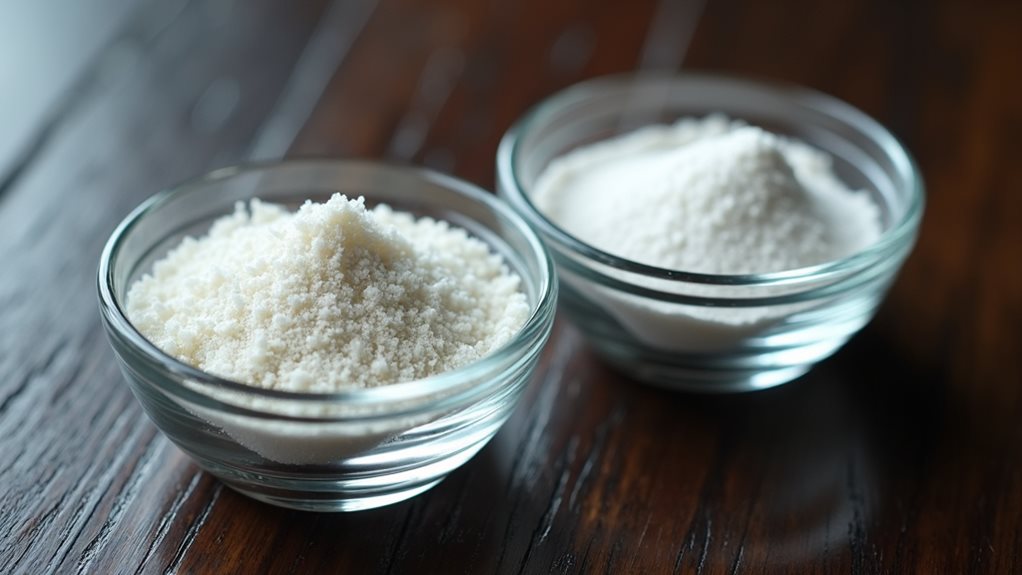
If you have a sensitive stomach or worry about side effects, choosing the right form of creatine can make a big difference. Creatine HCl is generally easier on your stomach and causes fewer side effects than monohydrate. It dissolves better, requires smaller doses, and leads to less bloating and water retention. This means better side effect management and improved digestive comfort. Many users find HCl gentler, with fewer stomach issues overall. While both types are safe, HCl’s higher solubility and smaller dose make it a practical choice if you want a supplement that’s easier on your digestive system. Digestive health can also be supported through proper hydration and timing to further enhance tolerability. Optimal dosing strategies can further help in minimizing potential side effects and maximizing benefits.
Is Creatine Monohydrate or HCl More Cost-Effective for Hardgainers?
For those who want to get the most out of their creatine supplement without breaking the bank, cost becomes a key factor. Creatine monohydrate is much more affordable, costing around $0.29 to $0.30 per 5-gram serving, compared to HCl’s $1.10 to $1.50. Both forms require the same dosage for best results, regardless of supplement timing or claims about better absorption. Brand reputation also matters, and monohydrate is well-researched and trusted. Since both options provide similar performance, monohydrate offers better value. For hardgainers, choosing the cheaper, proven option makes sense. It is also important to consider effective mass gainers that support fast metabolism and help hardgainers build muscle efficiently. It saves money without sacrificing results, making it the smart, cost-effective choice.
Frequently Asked Questions
Does Creatine Form Impact Hydration Levels During Training?
The creatine form impacts hydration levels during training by influencing fluid retention; monohydrate tends to cause more water retention and bloating, while HCl offers less fluid retention, helping you stay comfortable and perform better with ideal hydration.
Are There Long-Term Health Risks Associated With Either Creatine Type?
You can feel confident in the long-term safety of both creatine types, as research shows no significant health concerns when used responsibly. Stick to recommended doses, choose third-party tested products, and monitor your health for ongoing peace of mind.
Can Creatine HCL Be Stacked With Other Supplements Effectively?
You can effectively stack creatine HCl with other supplements due to its high stacking compatibility and supplement harmony. It mixes well with protein and beta-alanine, enhancing muscle gains and workout performance without any adverse interactions or diminishing returns.
Is There a Difference in Taste or Flavor Between the Two Creatine Forms?
The flavor comparison shows creatine monohydrate is neutral or slightly bitter, while creatine HCl has a distinctly sour taste. You’ll notice these taste differences, but many prefer capsules to avoid the sourness and feel connected with fellow fitness enthusiasts.
How Quickly Do Creatine Supplements Typically Produce Visible Results?
You’ll notice improvements in muscle endurance and recovery time within 1 to 4 weeks of consistent creatine use, helping you push harder and recover faster, making you feel more connected with your workout community as your strength grows.
Final Rep
If you’re a hardgainer, creatine monohydrate is generally the best choice. It’s effective, affordable, and widely studied. Creatine HCl may dissolve better and cause fewer stomach issues, but it’s usually more expensive and not proven to be more effective for muscle gain. Focus on consistency with your supplement and training. Both forms work, but monohydrate offers the best value and proven results for most people trying to build muscle.
Sources
The information in this guide is based on the following sources:
- International Society of Sports Nutrition position stand: safety and efficacy of creatine supplementation (2017)
- Kreider et al. (2017), PubMed record
- Examine.com: Creatine supplement monograph
Disclaimer: The information on this page is for educational purposes only and is not medical advice. Supplements are not a substitute for professional medical care. Always consult a qualified healthcare professional before starting any supplement, particularly if you have a health condition, take medication, or are under 18. Read our full medical disclaimer.

The EctoBulk Research Team is the editorial unit behind EctoBulk’s mass gainer, whey protein and supplement guides for skinny guys, hardgainers and ectomorphs. Every article is researched, cross-checked and reviewed before publication, with an emphasis on honest evidence over hype