If you’re a skinny guy struggling to gain weight, adding whey protein to your diet can help build lean muscle faster. Aim for 20–40 grams daily, especially after workouts, using high-quality options like whey isolate or concentrate. Focus on mixing it into calorie-rich shakes with ingredients like peanut butter or milk to enhance your intake. Consistent use, proper timing, and tracking your progress are key.
The Quick Answer
- Whey protein helps meet daily protein needs, supporting muscle growth for skinny guys struggling to gain weight.
- Consuming 20–40 grams post-workout boosts muscle recovery and promotes weight gain when combined with a calorie surplus.
- Incorporate whey into high-calorie shakes with ingredients like peanut butter or bananas to increase overall caloric intake.
- Timing whey intake around workouts and throughout the day ensures consistent amino acid supply for muscle development.
- Tracking progress and adjusting calorie and protein intake helps optimize weight gain and muscle growth over time.
Why Skinny Guys Need Whey Protein to Gain Muscle
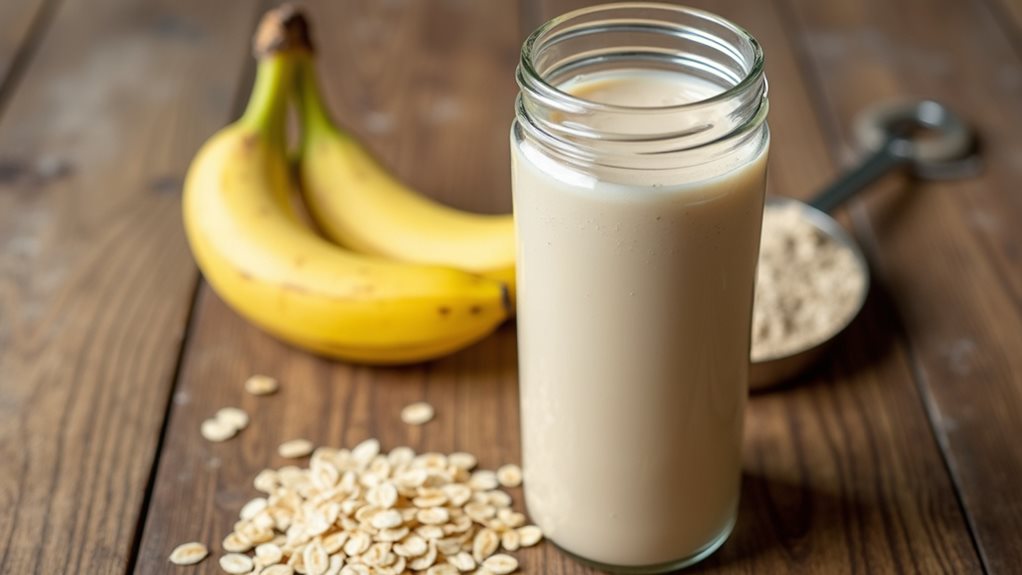
If you’re a skinny guy trying to build muscle, you probably struggle to hit your daily protein goals. That’s where whey protein becomes essential. It enhances protein absorption, ensuring your body gets the nutrients needed for muscle recovery. Efficient protein utilization is crucial because your body may not absorb nutrients as effectively due to metabolic factors common in skinny guys. Without enough complete proteins, your muscles can’t repair and grow effectively. Whey provides high-quality, complete amino acids that support lean muscle growth without extra fat. It’s a practical way to meet your protein needs, especially if you have a small appetite or a busy schedule. Using whey regularly helps you recover faster from resistance training and build muscle more efficiently, making your efforts more successful. To maximize muscle gains, many experts recommend consuming around 1.2 to 2.0 grams of protein per kilogram of body weight daily, with whey protein serving as a convenient supplement. Additionally, metabolic factors in skinny guys can hinder nutrient absorption, making supplementation even more important.
How Much Whey Protein Should You Take Daily for Best Results
The right amount of whey protein varies depending on how active you’re and your fitness goals. For most, 20–40 grams daily works well, especially after workouts to support muscle growth. To make your shakes enjoyable, try flavor combinations like chocolate-banana or vanilla-strawberry. Remember to store your whey in a cool, dry place to keep it fresh. For best results, stick to 1–2 scoops per day—about 25–50 grams. Adjust based on activity, and keep your intake consistent. Proper portioning and storage tips help you stay on track and avoid waste, making your muscle gain journey more effective. Additionally, whey protein is a complete protein, containing all essential amino acids necessary for muscle repair and growth. Since some individuals with fast metabolisms may need higher intake, consider effective mass gainers to supplement your diet if needed.
Which Type of Whey Protein Is Best for Lean Muscle Gains
Choosing the right type of whey protein is key when aiming for lean muscle gains. Whey isolate is a top choice because it has minimal lactose and fat, making it easier on sensitive stomachs and ideal if you’re tracking calories. Whey concentrate offers good BCAA content at a lower cost, supporting recovery. Whey hydrolysate is pre-digested for quick absorption, perfect right after workouts. When selecting, consider flavor options because enjoyment helps you stay consistent. Ingredient sourcing matters too—grass-fed whey provides all essential amino acids and often has higher quality standards. Additionally, protein digestibility plays a crucial role in how effectively your body can utilize the amino acids for muscle growth. To optimize your results, understanding calorie requirements can help you choose the right supplement to support your bulking goals without excess fat gain.
When and How to Incorporate Whey Protein Into Your Daily Routine
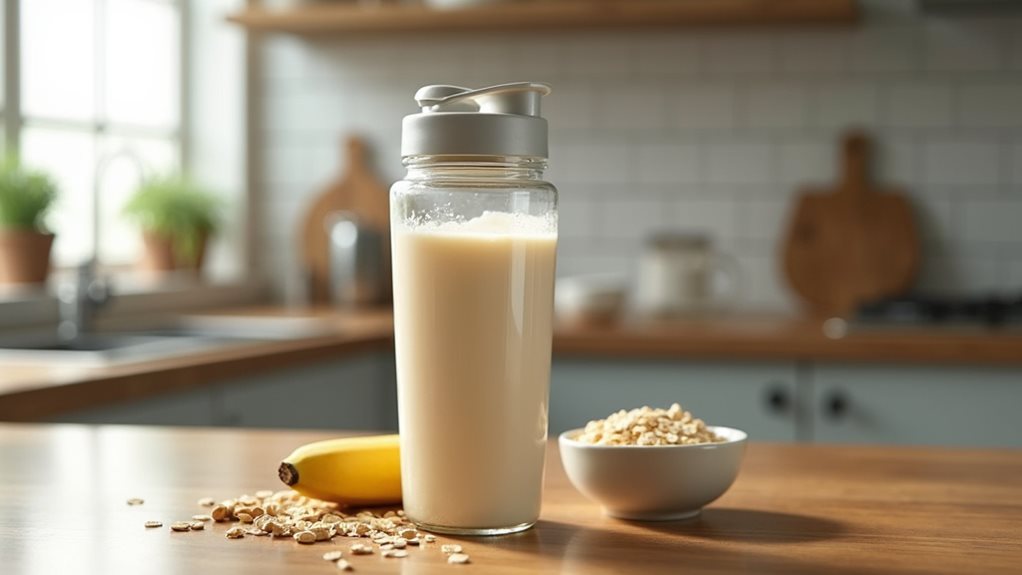
You should take whey protein at specific times to get the best results. After your workouts, aim for 20–25 grams within an hour to enhance muscle growth.
Consider drinking a shake 30–45 minutes before training.
You can also mix whey into meals or snacks to keep your protein intake steady throughout the day.
Incorporating whey protein at these strategic times can help optimize muscle gains, especially for hardgainers with a lower mass gain potential. Using whey protein with fast digesting properties can further support quick recovery and muscle synthesis.
Timing Your Protein Intake
Timing your protein intake is crucial for maximizing muscle growth, especially if you’re trying to gain weight. To do this effectively:
- Consume a whey protein shake within two hours after your workout for ideal muscle building.
- Have a protein-rich meal or shake 30–60 minutes before lifting to confirm amino acids are available.
- Spread your protein intake evenly throughout the day, using container options like shaker bottles or jars for convenience.
Mixing different flavor combinations keeps things interesting, and choosing the right container options helps you stay consistent. Proper timing enhances muscle gains and makes your routine more manageable and enjoyable.
Creative Mixing Ideas
Incorporating whey protein into your daily routine doesn’t have to be complicated. You can get creative with flavor combinations and baking substitutions to amplify your protein intake.
For example, add unflavored whey to pancake or muffin batter, replacing up to 25% of flour, and increase liquids to prevent dryness. Mix whey into snacks like cookies or energy balls, combining oats, peanut butter, and honey.
You can also enhance savory dishes, like hummus or pesto, with whey powder for extra protein. Whether blending smoothies or stirring into hot meals, these ideas make it easy to include whey protein naturally and enjoyably every day.
Creative Ways to Make High-Calorie, Protein-Packed Shakes
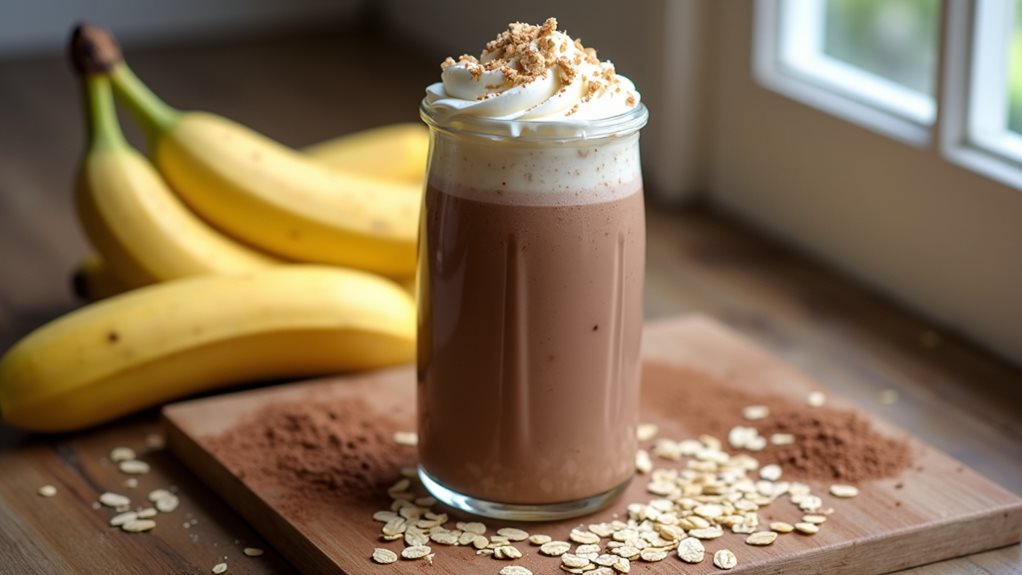
Creating high-calorie, protein-packed shakes that taste good and are easy to make requires some creative thinking. To enhance calories and flavor, try these strategies:
- Experiment with flavor combinations like peanut butter and banana or chocolate and berries.
- Use ingredient substitutions such as Greek yogurt instead of regular yogurt or almond butter instead of peanut butter to change the taste and nutrient profile.
- Add toppings like graham cracker crumbs or hazelnut spread for extra flavor and calories.
These simple swaps and ideas help you create satisfying shakes customized to your preferences, making it easier to meet your weight gain goals.
How to Combine Whey Protein With Other Supplements for Muscle Growth
To build muscle effectively, you need to time your supplements right and combine whey protein with other nutrients carefully.
Using creatine, carbs, and healthy fats along with your protein can enhance your gains without causing problems.
Staying strategic with your supplement stack helps you get the most out of your workouts and recovery.
Timing Your Supplement Intake
Timing your whey protein intake can make a difference in muscle growth, but it’s not the only factor. To get the most from your supplements, consider these tips:
- Consume 20–40 grams of whey within 2 hours after training to enhance muscle synthesis.
- Pre-workout, having 20–30 grams 30–60 minutes before exercise prevents muscle breakdown.
- Mix your whey with different flavor combinations for variety and enjoyment, making supplement timing easier to stick with.
Combining Protein With Carbs
Combining whey protein with carbs can substantially enhance muscle growth and recovery. This combo amplifies muscle protein synthesis better than protein alone.
To get the most out of your shakes, experiment with flavor combinations like vanilla and berries or chocolate and banana.
Mixing techniques matter too—blend thoroughly to avoid clumps and achieve smooth texture.
Pairing whey with carbs not only helps replenish glycogen but also increases amino acid availability for muscle repair.
This strategy supports your gains and makes your post-workout routine more enjoyable.
Stick to simple, effective mixes, and stay consistent to see real results in your muscle-building path.
Supplement Stacking Strategies
Stacking whey protein with other supplements can enhance your muscle growth when done correctly. To get the most out of your stacks, focus on effective combinations.
- Mix whey with creatine for strength gains, ensuring your supplement labels show 3-5 grams of creatine and about 20 grams of whey per serving.
- Add leucine and beta-alanine to your pre- and post-workout shakes for muscle synthesis, paying attention to flavor combinations that mask any bitterness.
- Incorporate casein before bed for sustained amino acid release. Remember, supplement labels guide proper dosing, and blending ingredients with compatible absorption rates creates a steady nutrient flow, maximizing your gains.
Common Mistakes to Avoid When Using Whey Protein for Weight Gain
Many guys trying to gain weight make simple mistakes that hold them back from seeing real results. First, they often underestimate the importance of a caloric surplus. Whey protein alone isn’t enough; you need to add high-calorie foods or mass gainers.
Second, overdoing the protein intake—more than 50 grams per serving—won’t help and can be wasted. Focus on 30–50 grams, spread out through your workout routines.
Also, don’t forget to mix your whey with calorie-dense ingredients like milk or peanut butter. Proper timing around workouts and good cooking tips can make a big difference.
Avoid these mistakes, stay consistent, and you’ll see progress.
How to Track Your Progress and Adjust Your Whey Strategy
Tracking your progress accurately is essential to making steady gains. To do this, focus on three key steps:
- Record your scale weight and body measurements weekly, noting changes in chest, arms, and waist. Adjust your calorie intake if weight gain exceeds 1 kg every two weeks.
- Take progress photos every two weeks, using similar clothing and lighting to spot subtle muscle gains that numbers might miss.
- Log your workouts and strength progress, aiming for consistent increases. Experiment with flavor combinations and packaging options of your whey to keep your routine fresh.
Consistent tracking helps you fine-tune your strategy and stay motivated.
Frequently Asked Questions
Can Whey Protein Cause Fat Gain if Consumed Excessively?
Yes, if you consume whey protein in a calorie surplus, it can lead to fat gain through fat conversion. To prevent this, track your intake, maintain a balanced diet, and make sure your total calories stay within your body’s needs.
Is Whey Protein Suitable for Lactose-Intolerant Skinny Guys?
Yes, you can enjoy whey protein if you’re lactose intolerant, especially with lactose-free options like whey isolate. It offers good digestive tolerance for many, helping you build muscle without discomfort, making you feel included and supported in your fitness adventure.
How Long Does It Take to See Muscle Gains From Whey?
You’ll notice muscle gains within 3 to 8 weeks, as your body improves recovery and protein absorption. Stay consistent, train hard, and you’ll feel part of our community growing stronger together with each workout.
Should Whey Protein Be Taken Before or After Workouts?
You should take whey protein around your workout because meal timing enhances protein absorption, supporting muscle growth. Whether before or after, the key is consistent intake, helping you belong to a community focused on building strength and size.
Can I Mix Whey Protein With Fruit or Other Supplements?
Yes, you can mix whey protein with fruit and other supplements. Experiment with flavor combinations like berries and cocoa, and use supplement stacking such as oats or healthy fats to optimize your gains and feel part of the fitness community.
Final Rep
Using whey protein can help you gain weight and build muscle, but it’s important to use it wisely. Follow the right amount and timing, choose the best type for your goals, and combine it with a proper diet. Track your progress and adjust as needed. Stay consistent and patient, and avoid common mistakes. With a clear plan, you’ll see results. Stay focused and keep pushing toward your weight gain goals.
References
Sources
The information in this guide is based on the following sources:
- International Society of Sports Nutrition position stand: protein and exercise (2017)
- International Society of Sports Nutrition position stand: nutrient timing (2017)
- Examine.com: Whey protein supplement monograph
Disclaimer: The information on this page is for educational purposes only and is not medical advice. Supplements are not a substitute for professional medical care. Always consult a qualified healthcare professional before starting any supplement, particularly if you have a health condition, take medication, or are under 18. Read our full medical disclaimer.

The EctoBulk Research Team is the editorial unit behind EctoBulk’s mass gainer, whey protein and supplement guides for skinny guys, hardgainers and ectomorphs. Every article is researched, cross-checked and reviewed before publication, with an emphasis on honest evidence over hype