For hardgainers, a high-quality multivitamin can support overall health and help fill nutritional gaps that may slow muscle growth. Look for products with transparent ingredient labels, adequate doses of B-vitamins, vitamin D3, and minerals like zinc and magnesium. Choosing one with third-party testing guarantees safety and effectiveness. Remember, multivitamins support your progress but won’t replace proper diet and training. Keep exploring to find out how to optimize your bulking plan effectively.
The Bottom Line
- Choose multivitamins with transparent ingredient labels, verified quality, and appropriate doses of essential vitamins and minerals.
- Prioritize products containing B-complex vitamins, vitamin D3, zinc, magnesium, and antioxidants to support energy, recovery, and immune health.
- Use multivitamins consistently with meals, ideally at the same time daily, to fill nutritional gaps during intense bulking phases.
- Combine multivitamins with proven supplements like creatine, protein, and amino acids for optimal muscle gain support.
- Avoid proprietary blends and overly high doses to ensure safety and effective nutrient intake tailored for hardgainers.
Do Multivitamins Help Hardgainers Bulk Effectively?

While multivitamins are popular among athletes, they don’t directly help you build muscle or bulk faster. If you have dietary restrictions or limited variety in your diet, a multivitamin can help fill nutrient gaps that might otherwise limit your training or recovery. Multivitamins support overall health and performance during intense training phases, which can indirectly benefit your bulking efforts. They can also help maintain a balanced nutrient intake, ensuring your body has the essential vitamins and minerals it needs for optimal functioning. Additionally, ensuring adequate intake of specific micronutrients for recovery, such as magnesium and zinc, can be especially beneficial for hardgainers during intense training periods. However, supplement interactions matter too—certain vitamins can interfere with medications or other supplements. Multivitamins aren’t a magic bullet; they’re support tools to keep your body functioning well.
For hardgainers, their main benefit is preventing deficiencies that could hold back progress. Remember, no supplement replaces consistent eating, proper training, and rest.
Multivitamins support your efforts but won’t do the bulk work for you.
Which Nutrients Should a Bulking Multivitamin Include?
A good bulking multivitamin should include key nutrients that support energy, muscle growth, and recovery. Focus on B-complex vitamins like B12, B6, folate, and others to enhance energy metabolism and aid tissue repair. Creatine is also beneficial as it provides additional energy for high-intensity workouts and muscle synthesis. Vitamin D3 and K2 help strengthen bones and improve loading tolerance. Minerals like magnesium and zinc support muscle function and mineral balance. Vitamins C and E act as antioxidants to protect muscles after workouts. To maximize nutrient absorption, look for chelated minerals, which are easier for your body to use. Additionally, including ZMA can support appetite and recovery, especially for hardgainers who struggle with muscle building. Also, consider supplement timing to optimize these nutrients when your body needs them most, especially around training sessions. Being aware of creatine bloating can help you choose the right forms and dosages to minimize discomfort while maximizing benefits.
How to Choose the Best Multivitamin for Muscle Gains
Choosing the best multivitamin for muscle gains requires more than just picking a popular brand. You need to focus on dosage accuracy and brand reputation.
Look for products with clear, full supplement facts panels that show exact amounts per serving. Third-party testing adds trust, confirming quality and purity.
Avoid proprietary blends that hide ingredient amounts—clinically effective doses matter. Reputable brands with transparent labels give you confidence you’re getting real value.
Practicality counts too; pick a multivitamin that fits your routine and budget. The right choice supports your bulking goals by providing reliable nutrients without unnecessary fillers or hype. Additionally, choosing a multivitamin with accurate nutrient dosing can help ensure you’re meeting your specific nutritional needs for optimal muscle growth. Ensuring your supplement contains verified ingredient amounts is crucial for effective support during bulking.
What Can and Can’t a Multivitamin Do During Bulking?

A multivitamin can help fill in nutritional gaps during your bulk, especially when your diet lacks variety. It supports energy, recovery, and immune health, which are all important when training hard. Zinc and magnesium specifically support muscle recovery, which can enhance your gains over time. Adequate intake of B vitamins is also essential, as they play a key role in energy production and metabolism. However, it can’t replace the need for enough calories or protein, nor can it do the actual work of lifting weights or sleeping well.
Micronutrient Support Limits
Ever wonder what a multivitamin can really do for hardgainers during bulking? It helps support micronutrient balance by filling small diet gaps, especially when your high-calorie foods lack fruits or vegetables.
But keep in mind, multivitamins are limited. They can’t replace enough calories or protein needed for muscle growth. Overdoing it can threaten supplement safety, especially if you exceed upper limits for nutrients like vitamin A or iron.
Be cautious—more isn’t always better. Always review labels carefully, especially if stacking supplements. Remember, a multivitamin provides modest backup, but it’s your diet that truly fuels your gains.
Muscle Growth Impact
While multivitamins can support your overall health, they aren’t magic pills for muscle growth. They don’t directly increase muscle fiber recruitment or enhance hormonal regulation on their own. Instead, they help fill in nutritional gaps that may limit your training progress.
Proper muscle growth still depends on consistent resistance training, enough calories, and enough protein. Multivitamins support recovery, immune function, and blood oxygen delivery, which can keep you training hard longer.
But they won’t replace your workout plan or supplements like creatine. Use them as a backup, especially during busy or intense bulking phases, to help your body perform at its best.
How to Support Your Multivitamin With Proven Muscle-Boosting Supplements
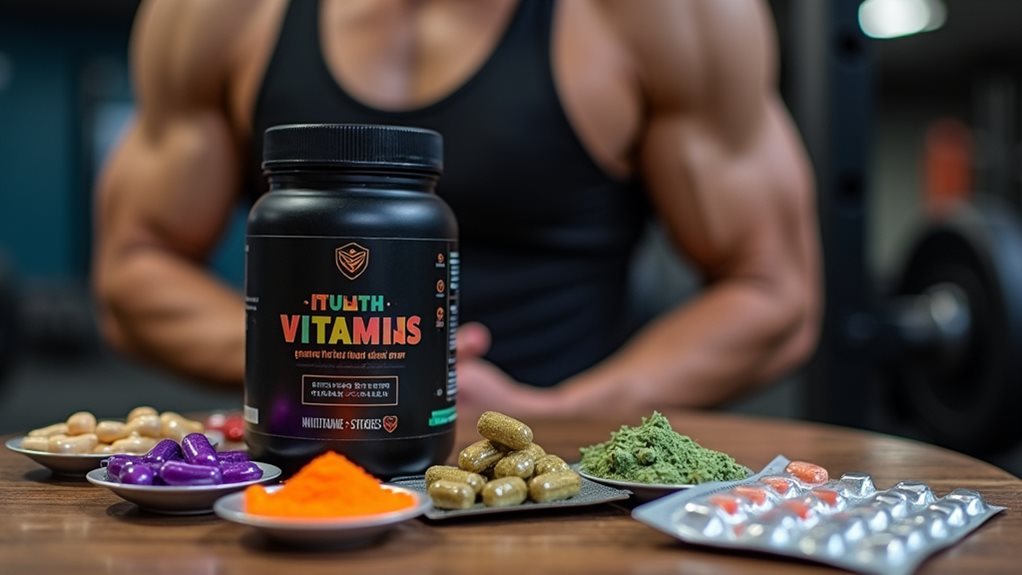
Supporting your multivitamin with proven muscle-boosting supplements can enhance your gains and recovery.
Creatine, for example, has strong evidence for increasing strength and lean mass when used consistently.
Pairing it with quality protein and other key nutrients helps maximize your bulking efforts safely and effectively.
Creatine’s Muscle-Boosting Power
Creatine is one of the most effective supplements for hardgainers looking to build muscle. It works through creatine cooperation, increasing phosphocreatine stores that help regenerate ATP during high-intensity efforts like heavy lifting.
Proper nutrient timing can maximize its benefits, so taking creatine around your workouts guarantees you get the most out of each dose. A typical dose is 3–5 grams daily after an initial loading phase.
Creatine supports higher training volume and repeated effort, making it essential for bulking. While it’s a proven muscle-boosting supplement, it works best when combined with a solid multivitamin to fill nutritional gaps.
Supporting Recovery Naturally
Maximizing recovery is essential for hardgainers who want to build muscle effectively. To do this, focus on supporting your multivitamin with proven muscle-boosting supplements.
Proper supplement timing can improve vitamin absorption, ensuring your body gets the nutrients it needs when it needs them most. For example, taking magnesium and zinc with meals helps enhance absorption and supports muscle contraction and repair.
Vitamin D is best absorbed when taken with fats, so consider pairing it with a healthy meal.
These small strategies make a big difference, helping your body recover faster, grow stronger, and release your full potential.
Prioritizing Evidence-Based Supplements
Adding proven supplements to your multivitamin can enhance your muscle-building efforts. To get the best results, focus on supplement timing and dosage optimization.
Creatine monohydrate is the most supported supplement for increasing strength and lean mass, especially for hardgainers. Take it consistently, ideally around your workouts, to maximize benefits.
Protein and amino acids support muscle growth when your diet falls short, but they’re less effective alone.
Beta-alanine helps with high-intensity training, while HMB aids recovery.
Use these supplements strategically, respecting recommended doses and timing. Combining them with a solid multivitamin ensures you cover both micronutrient needs and performance support for your bulking expedition.
Practical Tips for Using Multivitamins in Your Bulking Routine
Consistency and timing are key when using multivitamins in your bulking routine. Take your multivitamin at the same time each day to build a habit and support your goals.
Choose a product with flavor options and bottle sizes that suit your preferences. Smaller bottles are easier to carry if you’re on the go, while larger bottles can save money and reduce refills.
Remember, multivitamins are there to fill in nutritional gaps, not replace your calorie-rich foods. Use them daily with food and stick to your routine.
Simple, consistent use helps guarantee you get the benefits without overcomplicating your bulking plan.
Frequently Asked Questions
Can Multivitamins Replace a Balanced Diet During Bulking?
No, multivitamins can’t replace a balanced diet during bulking because dietary supplements support nutrient gaps but don’t enhance nutrient absorption or provide the fiber and variety you need for ideal muscle growth and overall health.
Are There Any Risks Associated With Excessive Multivitamin Intake?
You risk nutrient toxicity with multivitamin overdose, which can harm your organs or cause symptoms like nausea, weakness, or nerve damage. To stay safe, stick to recommended doses and avoid excessive supplement use.
How Often Should I Update My Multivitamin Based on Blood Tests?
You should update your multivitamin based on blood tests when nutrient deficiencies appear, usually after several months. Focus on supplement timing and nutrient absorption to optimize performance and recovery, ensuring your formula supports your training community.
Do Multivitamins Improve Workout Performance Directly?
Multivitamins don’t directly enhance workout performance, but they support supplement absorption and muscle recovery, especially if you have dietary gaps. When your nutrition is solid, multivitamins mainly help maintain overall health, promote a stronger, more connected fitness community.
Are Organic or Natural Multivitamins More Effective for Bulking?
Organic supplements aren’t more effective than synthetic ones for bulking; natural nutrients matter more. Focus on bioavailability and nutrient form, but remember, a multivitamin mainly supports filling gaps, not directly building muscle.
Final Rep
Using a multivitamin can support your bulking efforts by filling nutritional gaps and enhancing overall health. However, it won’t replace proper diet or targeted supplements. Choose a multivitamin with essential nutrients like vitamins D, B12, zinc, and magnesium. Pair it with proven muscle-building supplements for better results. Stay consistent, focus on your training, and remember, supplements are just tools—hard work and proper nutrition are key to gaining muscle effectively.
References
- https://www.healthline.com/nutrition/supplements-for-muscle-gain
- https://www.reddit.com/r/naturalbodybuilding/comments/1l95mp0/multivitamins_for_extra_gains/
- https://proteinjug.com/best-bodybuilding-multivitamin/
- https://wellwhisk.com/best-multivitamins-for-bodybuilding/
- https://bodybuilding-wizard.com/12-best-vitamins-and-minerals-for-athletes-and-bodybuilders/
- https://www.performancelab.com/blogs/multi/multivitamin-benefits-to-bodybuilding
- https://www.youtube.com/watch?v=XkbghkAWYLY
- https://nakednutrition.com/blogs/supplements/best-supplements-bulking
- https://lvac.dotfit.com/content-5749.html
- https://www.bornfitness.com/multivitamins/