If you’re bulking, whey concentrate is a cost-effective choice that provides enough protein to support muscle growth, with only slightly more fat and carbs than isolate. Whey isolate offers higher purity, faster absorption, and less lactose, making it a better option if you’re lactose sensitive or want quicker recovery after workouts. Both work well, but your choice depends on your lactose tolerance and budget. Keep exploring to find out how to optimize your gains with the right protein.
The Bottom Line
- Whey isolate offers higher protein purity (90–95%) and faster absorption, ideal for post-workout recovery during bulking.
- Whey concentrate is more cost-effective, providing sufficient nutrients and beneficial bioactive compounds for muscle growth.
- Both types have minimal calorie and fat differences; focus on total daily intake for bulking success.
- Isolates are better for lactose-sensitive individuals due to lower lactose content, reducing digestion issues.
- Processing methods influence bioactive retention; membrane filtration preserves more health-promoting compounds in both types.
What Are the Nutritional Differences Between Whey Isolate and Concentrate?
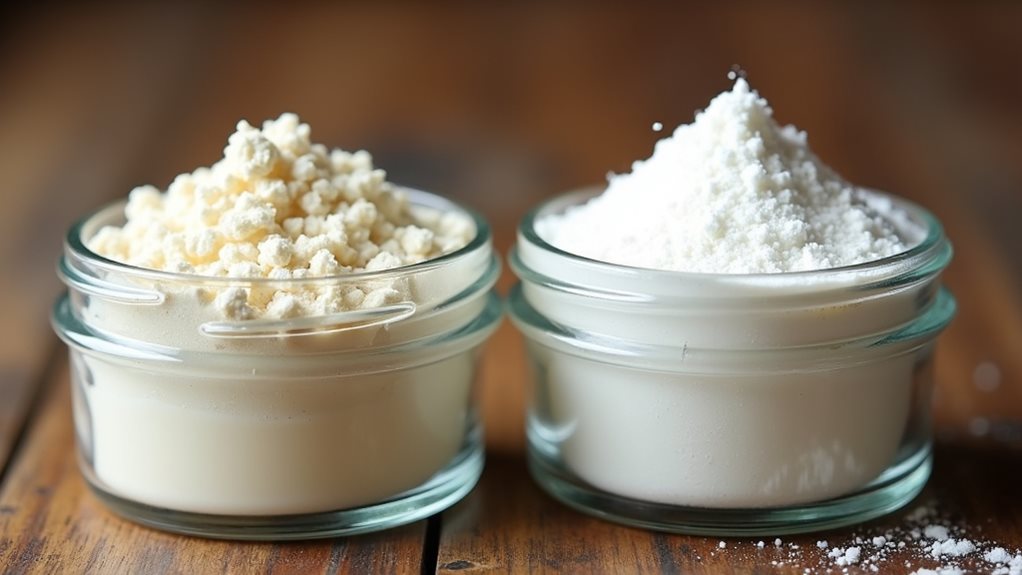
When choosing between whey isolate and concentrate, understanding their nutritional differences is important. Both provide a complete amino acid profile, making them excellent sources of essential nutrients for muscle building. Whey isolate has a higher nutritional value because it contains 90–95% protein by weight and less fat, carbs, and lactose. This means it delivers more protein per serving and is absorbed faster, ideal for post-workout recovery. Additionally, processing methods play a significant role in determining the purity and nutritional content of each form. Whey concentrate, while slightly lower in protein, retains some fats and carbs that add to its nutritional profile. Both forms support your goals, but isolate offers a purer, more efficient protein source. For those aiming to optimize muscle growth, understanding caloric content can help tailor your intake to support lean bulking without excess calories. Moreover, being aware of lactose content is especially helpful for individuals with sensitivities, ensuring they choose the most suitable option.
Does Fat and Calorie Content Affect Your Bulking Results?
The small differences in fat and calorie content between whey isolate and concentrate generally don’t have a considerable impact on your bulking results. The calorie impact is minimal—around 10 calories per serving—so it won’t significantly affect your overall calorie intake. The fat significance is also minor; concentrate has slightly more fat, which helps support a caloric surplus essential for muscle growth. Both types provide similar protein amounts, so your focus should be on total daily calories and protein. In most cases, choosing between them depends more on personal preference and dietary needs rather than any real difference in fat or calorie content affecting your bulking success. Additionally, EAA powders can be a valuable supplement for maintaining amino acid intake without significantly impacting calorie goals. Understanding the nutritional differences can help you make more informed choices aligned with your bulking strategy.
Which Whey Protein Is Better for Digestion and Lactose Tolerance?
Choosing the right whey protein for digestion depends largely on how your body handles lactose. If you have lactose sensitivity, you’ll want a product that offers better digestive comfort.
Whey isolate contains less than 1% lactose, often under 0.5 grams per serving, making it much gentler on your stomach. In contrast, whey concentrate has 3–5% lactose, which can cause discomfort for some people, especially in larger amounts.
Most with mild lactose sensitivity can tolerate a single serving of concentrate, but isolates are generally easier to digest. For better digestion and less bloating, especially if you’re lactose sensitive, whey isolate is the safer choice. Additionally, lactose content plays a significant role in how easily your body can process these proteins. Understanding lactose tolerance can help you choose the most suitable option for your dietary needs.
Is Whey Concentrate the Best Value for Building Muscle?
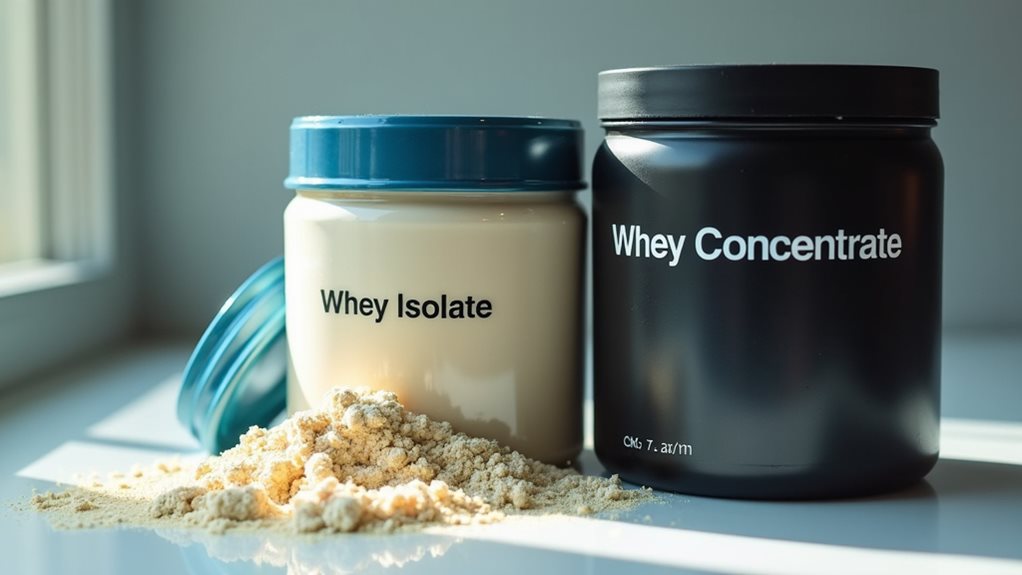
If you’re trying to build muscle without breaking the bank, whey concentrate offers a clear advantage. It provides great value, costing 30–50% less per gram of protein than isolates, saving you around $277 a year.
Plus, its flavor preferences often appeal more than isolates, especially if you like creamier textures. Brand quality matters, but many reputable brands produce concentrates with high protein content and good taste.
For most people focused on bulking, concentrate delivers enough leucine to trigger muscle growth while supporting recovery with extra carbs and fats. Additionally, since whey concentrate retains more beneficial nutrients like immunoglobulins and lactoferrin, it can offer additional health benefits beyond just muscle building. Incorporating whey concentrate into your diet can also support overall immune health and recovery processes.
How Does Processing Impact Bioactive Compounds in Whey Protein?
Processing methods can markedly change the natural bioactive compounds in whey protein. Different techniques impact bioactive retention, which is key for immune health, inflammation reduction, and overall well-being.
For example, ion exchange chromatography produces high-purity whey but may lower bioactives. Membrane filtration preserves more of these beneficial compounds.
Extended purification in isolates can remove micro-nutrients like lactoferrins.
Drying methods also matter; fluidized bed drying retains more bioactive structures than spray drying.
Knowing how processing impacts these compounds helps you choose the best whey product. The right processing preserves essential bioactives, ensuring you get the maximum health benefits from your supplement.
Frequently Asked Questions
How Does Whey Protein Impact Overall Daily Calorie Intake During Bulking?
Whey protein impacts your calorie management by adding nutritious calories without excess fat. Proper nutrient timing, like post-workout, maximizes muscle gains and prevents unwanted fat, helping you stay on track during bulking and promoting a sense of community with fellow lifters.
Can Whey Isolate Help With Faster Muscle Recovery Post-Workout?
Whey isolate helps you recover faster by speeding up muscle repair, providing essential amino acids quickly. This enhances your recovery speed, so you can get back to training stronger, feeling connected to a supportive community that values your progress.
Are There Any Taste Differences Between Whey Isolate and Concentrate?
You’ll notice taste differences: whey concentrate offers a richer, creamier flavor with natural sweetness and full mouthfeel, appealing to those who prefer richer flavors. Whey isolate has a lighter, neutral taste, ideal for fruity or clear drinks.
Does the Source or Brand of Whey Affect Its Quality or Effectiveness?
You can trust your whey if you prioritize brand reliability and source purity, ensuring transparency and third-party certifications. Choosing reputable brands guarantees quality and effectiveness, helping you feel confident and connected in your fitness odyssey.
Is There a Significant Difference in Amino Acid Profiles Between the Two?
You’ll find minimal amino acid variance between whey isolate and concentrate, as their protein compositions are virtually identical. Both provide complete amino acid profiles, making either choice effective for muscle building and satisfying your fitness goals.
Final Rep
Choosing between whey isolate and concentrate depends on your goals. If you want faster absorption and less fat, isolate is the better option. But if you’re looking for more value and some beneficial compounds, concentrate works well. Consider your digestion and lactose tolerance too. Both can help you build muscle, so pick the one that fits your needs and budget. Stay consistent, and you’ll see progress no matter which whey you choose.
References
Sources
The information in this guide is based on the following sources:
- International Society of Sports Nutrition position stand: protein and exercise (2017)
- International Society of Sports Nutrition position stand: nutrient timing (2017)
- Examine.com: Whey protein supplement monograph
Disclaimer: The information on this page is for educational purposes only and is not medical advice. Supplements are not a substitute for professional medical care. Always consult a qualified healthcare professional before starting any supplement, particularly if you have a health condition, take medication, or are under 18. Read our full medical disclaimer.

The EctoBulk Research Team is the editorial unit behind EctoBulk’s mass gainer, whey protein and supplement guides for skinny guys, hardgainers and ectomorphs. Every article is researched, cross-checked and reviewed before publication, with an emphasis on honest evidence over hype